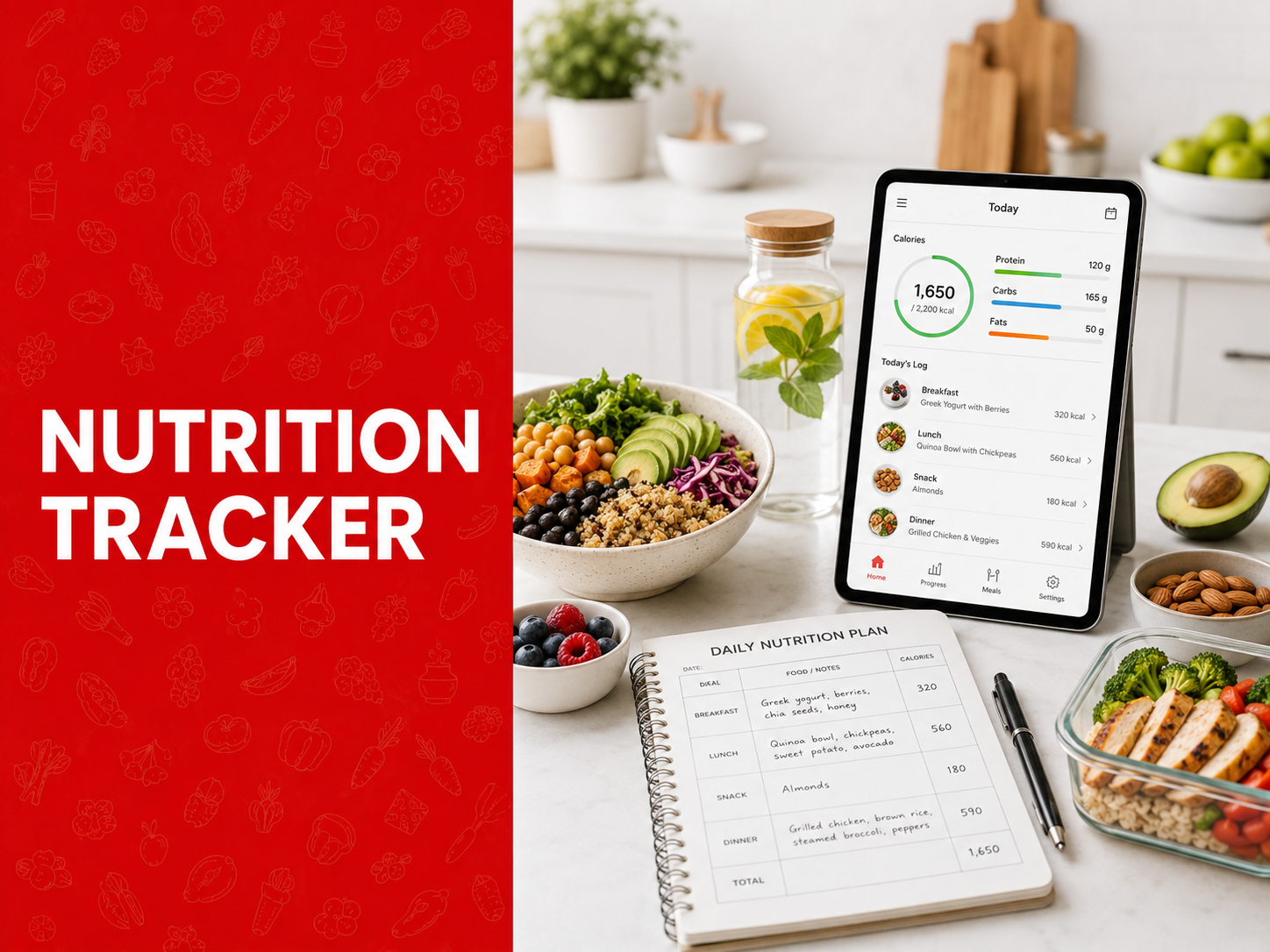
Nutrition Tracker: Monitor Calories, Protein, Carbs for Better Health
2026-09-04
An objective like "eating healthier" can be clarified using a nutrition tracker. You might be familiar with the importance of protein, how calories relate to energy balance, or the role of carbohydrates as fuel, but now that you're looking at the foods you're cooking at home, the answer might not be as clear. So, how many calories did you actually eat in that meal? How many grams of protein did you consume? Oil, sauce, or ingredients which you would never have thought mattered much?
Nutrition tracking is where it can help. A good tracking tool can display nutritional information in an easier-to-understand manner, rather than having to guess or remember what was eaten throughout the day. Foodsie extends this further by pairing nutritional info with recipes so users can consider more than just the individual ingredients and the nutritional value of the foods they're preparing.
Let's explore what it means to track your nutrition, why calories aren't everything, how to get to understanding protein and carbs, and the tools you can use to help you better evaluate the nutritional content of your homemade meals, including a recipe nutrition calculator. Most importantly, we will discuss how to utilize the nutrient information without “gamenutrition” being just a math problem.
What Is a Nutrition Tracker?
The simplest way of using a nutrition tracker is by maintaining a record of your food intake, along with the nutritional benefits of that food.
This could be anything from calories, protein, carbs, fats, fibre and other nutrients. Some trackers have limited applications for single foods; others are able to track an entire meal or even a recipe.
It comes in handy when you decide to prepare your own meals.
Packaged foods will typically have a nutrition label. A homemade meal doesn't mean that it isn't incredibly delicious. When you add a few ingredients to a pan, you can't expect a label to pop up next to the finished dish saying, "Here's an illustration of the dishes you could make by putting this together.”
That is where the nutrition tracker can help.
When nutritional information is visually presented, the difficulty of evaluating a meal's healthiness is taken out of the equation.
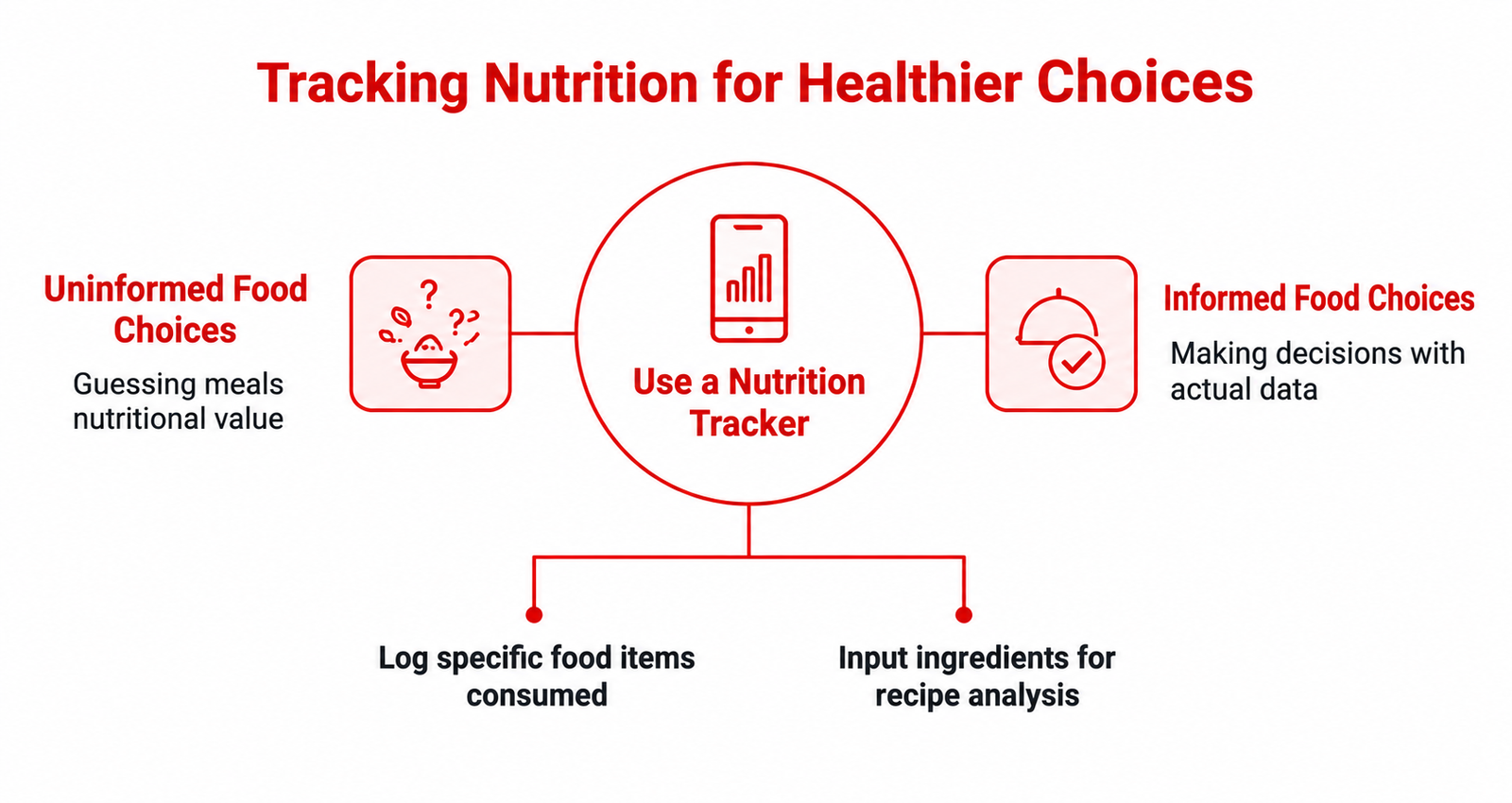
Why Tracking Calories Alone Isn't Enough
Calories matter, but they don't tell the entire story.
Differences in macronutrients (like fat, protein, carbohydrate, and fibre content) and micronutrients (vitamins and minerals) between 2 meals can be quite large, even if the calorie totals are the same.
Hence the need to advance beyond counting calories when it comes to modern nutritional monitoring.
If you're a fitness enthusiast, protein may be particularly vital. Consumers wishing to make a change to their overall diet may focus more on fibre or the type of foods they are choosing to add carbohydrates to their diet.
The idea is not to get obsessed with all the numbers. It's to know what is being implied by the numbers.
As you can now see the whole picture, you can make informed choices.
Why Protein Deserves a Place in Your Daily Tracking
Protein is one of three key macronutrients, along with carbs and fats.
It is part of body tissues and works in several processes in the body. It is also known to provide postprandial satiety.
Even if you know protein is important, you don't know how much you are consuming.
Breakfasts may sound like a big meal but are actually relatively low in protein. On the other hand, a standard meal can make a big dent in the nutrition for a day.
These patterns can be made visible by tracking.
It's not necessary to change it all, just one thing at a time. One of the best things about keeping track can sometimes be finding out how your diet is doing.
What About Carbohydrates?
Carbohydrates tend to be either avoided or treated as the king of the food for people to eat liberally. In reality, the situation is more complicated.
For energy needs, selecting carbohydrates is vital, and a variety of foods are naturally rich in them. Carbohydrates can come from fruits, vegetables, beans, lentils, whole grains, or a combination of these sources.
But when it comes to carb counting, it's not all sunshine and roses.
Additionally, it is important to think about where these carbohydrates are from and other food benefits.
Use a nutrition tracker to give you an idea of the amount. The food choice context is provided by your broader food choices.
How Do You Figure Out Nutritional Values for Homemade Food?
This is where everything gets interesting…
For an at-home recipe, you'll typically have to estimate the nutrition of each individual ingredient and then estimate how that recipe portion is divided up by amount of food per serving, etc.
Suppose you have too much of some ingredients that you made a lot of. The entire recipe, rather than each plate, is the total nutritional value.
In five servings, it must be divided into those 5 quantities.
This seems straightforward until you have to work out the ingredients on your hands… that would be ten ingredients, after all!
Then there are also oils, sauces, and toppings, other brands, amounts of ingredients, and portion sizes.
All of a sudden, your quick calculation has become a spreadsheet… agh
This is where digital tools can bring time-saving to the table.
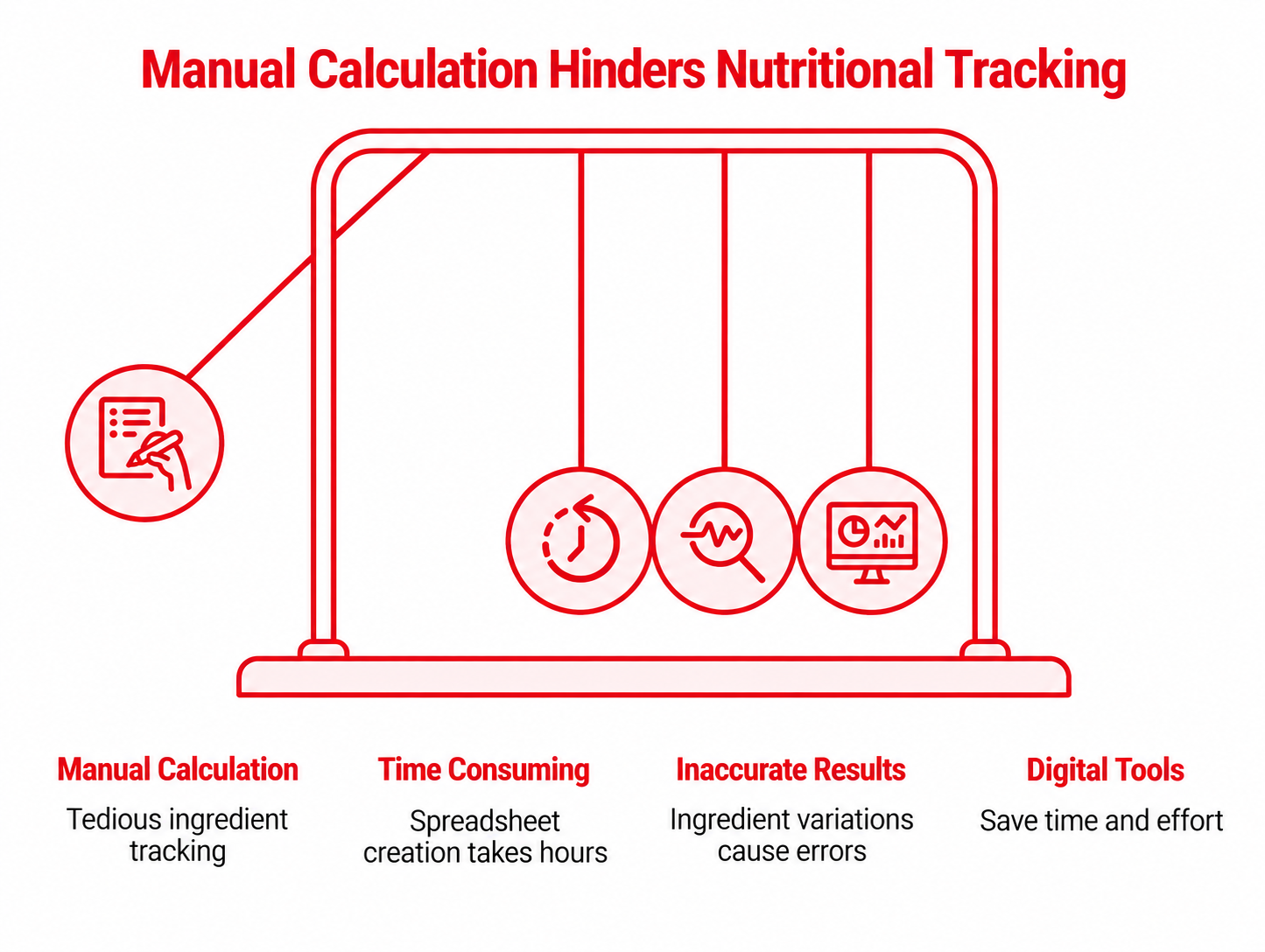
A Recipe Nutrition Calculator Makes Homemade Meals Easier to Track
To remove the tedious manual calculation process, a recipe nutrition calculator is designed.
It is not necessary to enter the nutritional content of each ingredient and use the numbers to figure out your own nutritional profile, as an estimate of that profile can be made using a calculator.
This can go a long way when you're cooking at home since there are no standards like there are with recipes for packaged goods.
You can alter one of the ingredients.
Please feel free to use another amount.
Can make 6 servings rather than 4.
A recipe-prepared calculator will help you get a realistic idea of how such decisions will impact the nutritional summary.
Truthfully, it's more useful than a nutrition chart and hoping the numbers will somehow add up.
What Makes Homemade Food Difficult to Track?
The daily pleasure of homemade food provides control of the meal.
It also introduces some variables.
This ingredient can double in a tablespoon. That little potato can be big! You can buy different brands of yoghurt that could have an entirely different nutritional profile.
There’s also the issue of how much.
You may make a wonderfully balanced meal and still eat a lot more or less than the amount of nutrition it has.
But that doesn't mean you should give up on homemade food.
It just means that if the numbers of ingredients used and the portion sizes served are fairly representative and reasonably close to reality, the estimates are more useful.
It's not precision lab work… It's consistency.
The Hidden Calories People Often Forget
You can often overlook some of the ingredients if they're not the primary course but are still present.
One such example is cooking oil.
So are dressings, sauces, spreads, cheese, sugar, and toppings.
There can be a difference in nutritional value between a light meal and one that becomes quite a bit heavier when a few items are added to it.
This is one of the reasons that a homemade food calorie calculator might be beneficial.
You can add the oils or sauces to the total to obtain a better estimate than taking it for granted that they are very little and equating them to “a little oil” and “some sauce.”
It is the little things that count, not out of fear, but from the perspective that they are what you are eating!
Is a Free Nutrition Tracker Enough?
This one asks many people whether or not they should do it, particularly when it's just to become more aware of when they eat and what they eat.
While a subscription-based system may offer both more information and detailed tracking capabilities, a free nutrition tracker can give enough information to work out calories and macronutrients without the need for an expensive subscription or a complicated system.
More important than the price is the level of information that the tool is able to offer that you can use.
A tracker will provide you with hundreds of numbers, but they may be hard to decipher and not yet helpful when all you need is a few obvious numbers.
Don't just look for a doable design!
Convenience is important if you will utilize something on a regular basis.
How Accurate Are Nutrition Calculators?
This is a relevant question, especially if you are on a food tracking regimen.
The statistics on nutrient data are usually used as estimates, not lab-determined figures. This will depend on the quality of the food data used by them, the ingredients used, the amount, how it is prepared, and the quantity served, among other things.
But it doesn't render them worthless.
Just means you need to be familiar with what the numbers signify.
Standard estimations can prove useful for all day-to-day nutritional knowledge and meal planning. Being able to recognize the patterns over time can help you make adjustments that are right for your business.
Stop thinking of tracking as perfection in math. Don't think of tracking as a promise of perfection when it comes to math.
Why Serving Size Can Change Your Numbers
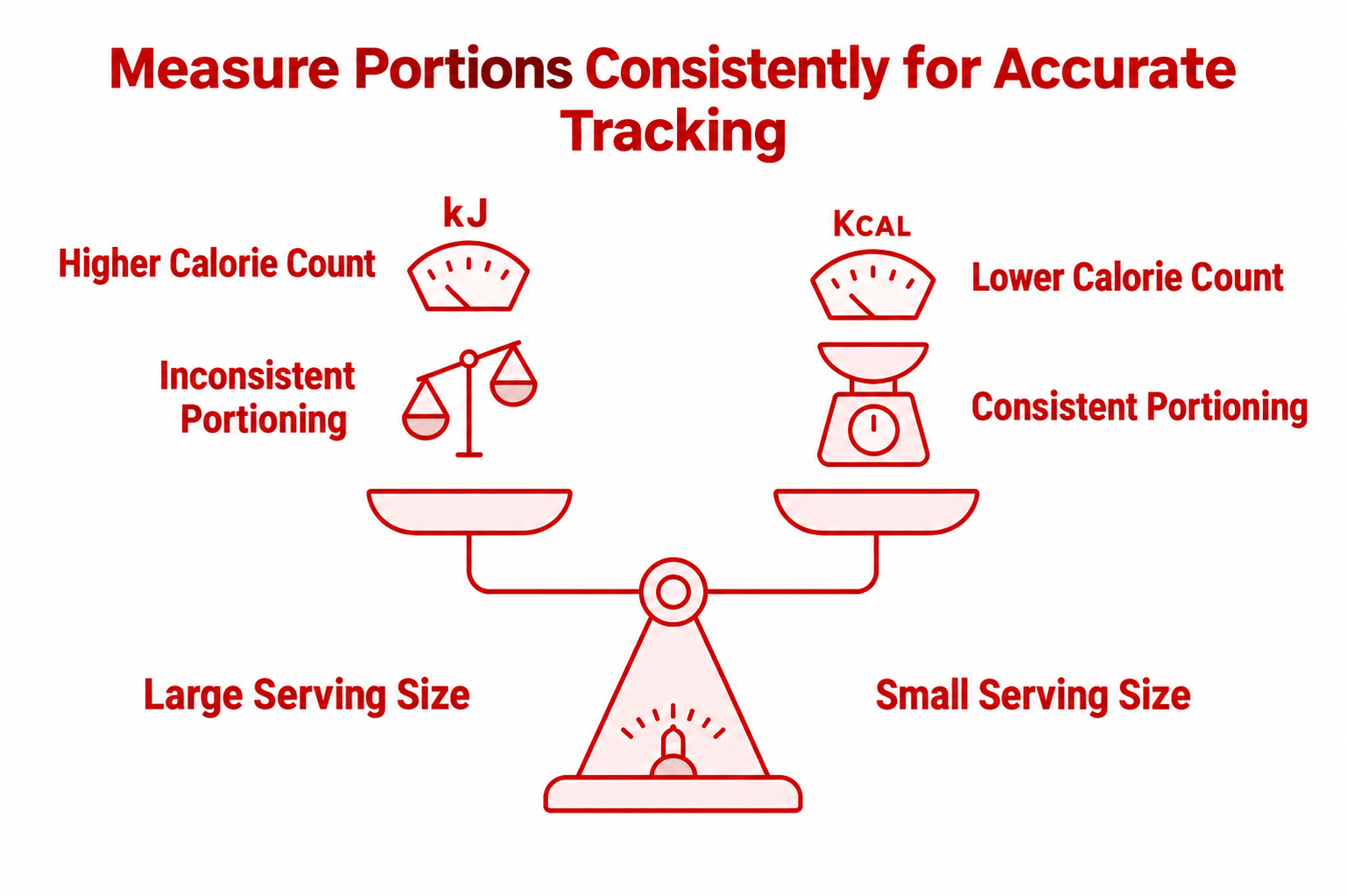
Suppose that the total of all the calories in your homemade recipe is 1,800 calories.
That figure varies in significance when considering various portions of food.
Three servings will be approximately 600 calories per serving.
A total of 6 servings would be approximately 300.
The ingredients are the same.
The portion has.
Therefore, it is key to know what size the ingredient corresponds to when utilizing a diet information calculator. If you are looking for useful or worthwhile results, the amount of food being assessed should fairly match the amount of food being consumed.
Often, the most significant thing you can do for your tracking isn't to use a more powerful calculator.
It's taking proportionate and regular amounts.
Don't Let Tracking Turn Into an Obsession
It isn't until there's a point where useful awareness becomes unnecessary stress.
If it is always reminding you how much you should be worried about if the meal won't be five calories more, then it isn't helping you.
Nutrition tracking should be a tool that aids you and doesn't rule you.
Most people can derive more benefit from pattern recognition.
Perhaps you're not always consuming a sufficient amount of protein.
Perhaps you're eating insufficient amounts of fibre.
Perhaps some foods have more calories in them than you thought.
Those are fantastic tips.
You can take action on them without doing endless calculations of every bite.
How Foodsie Can Simplify Nutritional Tracking
That's where Foodsie's recipe-centric approach is particularly helpful.
Foodsie treats Nutrition Information differently and associates it with the recipes people are preparing.
It provides nutritional tools that enable users to know the calorie and macronutrient information of meals, and recipe functions enhance its functionality around food, making it more user-friendly.
It's a significant connection…
People don't eat isolated numbers.
They eat meals.
If you have an awareness of the nutrition profile of the meals you prepare, you will have information and answers ready next time you want to cook.
What Should You Look for in a Nutrition Tracker?
When selecting a nutrition tool, there's no need to get carried away by all the features.
Begin at the bottom.
- Does it help you to understand calories?
- Is it easily detectable for proteins, carbohydrates, and fats?
- Will it work with self-made dishes?
- Is it able to represent portions?
- Do you have to spend more time reading it than you spend cooking?
Those questions are more important than bells and whistles.
A good nutrition tracker should help consumers access nutrition information, not the other way around.
Nutrition Tracking Works Best When It Supports Your Goals
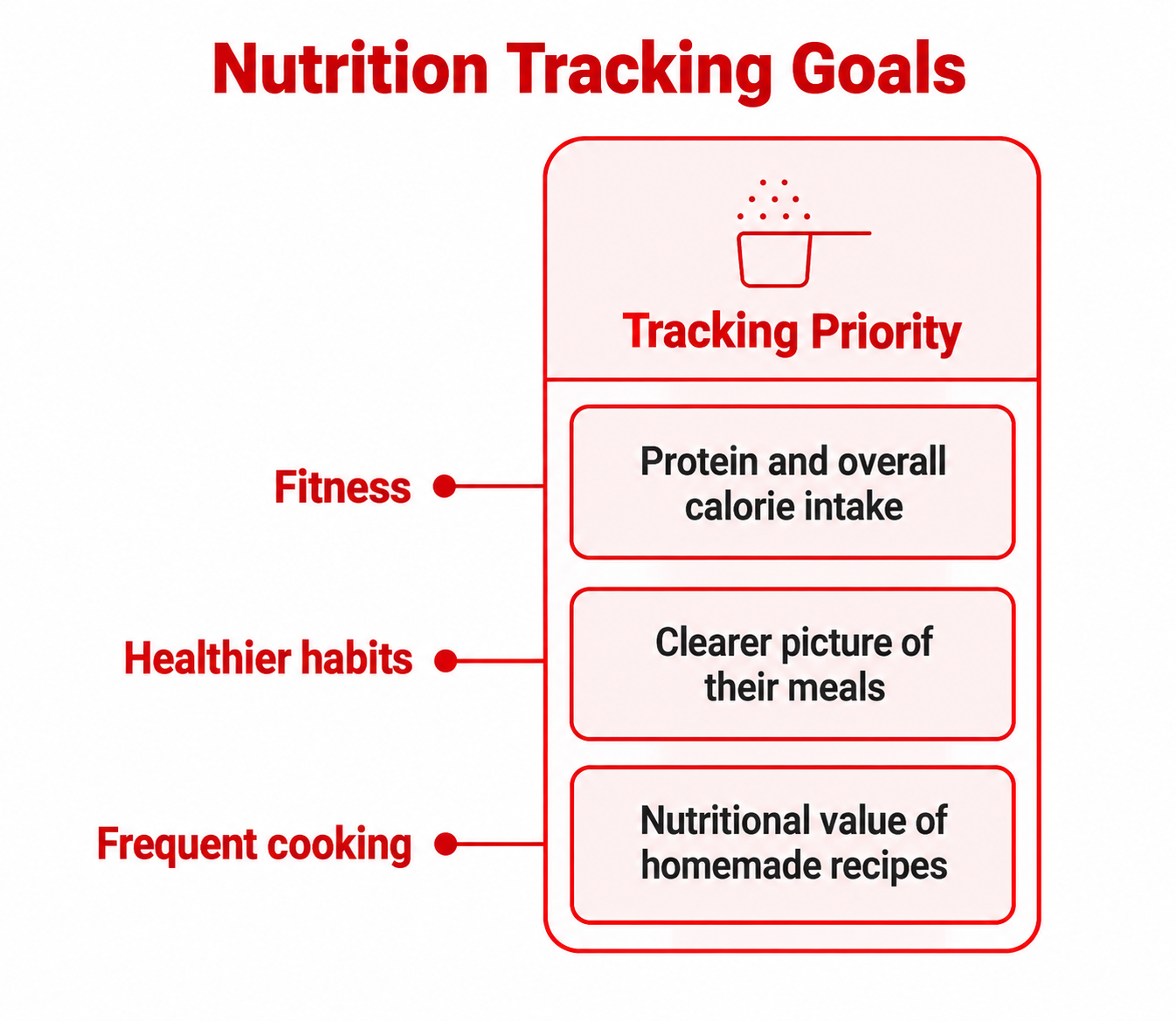
There is no right or wrong method to track nutrition, as everyone uses it for different reasons.
A healthy person might pay special attention to protein and calorie consumption.
When establishing a new healthy lifestyle, a person might just want to get a better visual of meals.
Frequent cooks may need to learn about home cooking nutrition.
A tool isn't obligated to direct everyone in what they should eat.
It should provide sufficient information for people to make their own choices.
That separation is significant.
A good nutrition technology should educate YOU, not make decisions for you
From Guesswork to Better Food Decisions
There's a psychological benefit to understanding your food that doesn't get discussed enough.
Uncertainty makes decision-making harder. When you don't know what's in a meal, you may either ignore the question completely or become unnecessarily worried about it.
Clear information creates a middle ground. You can look at a meal, understand its nutritional contribution, and decide what makes sense for you.
No panic.
No guesswork.
Just information.
And over time, that knowledge can make healthy choices feel much more natural.
Conclusion
A nutrition tracker isn't meant to turn every meal into a calculation. Its real value is giving you a clearer picture of what you're eating so you can make more informed decisions. Calories matter. Protein matters. Carbohydrates matter. But so do portion sizes, ingredient choices, fibre, overall dietary patterns, and the quality of the food you're eating.
For homemade meals, tools such as a recipe nutrition calculator, nutritional info calculator, or calorie calculator for homemade food can remove much of the tedious work involved in estimating those values manually.
Foodsie brings that nutritional understanding closer to the food itself, helping users move from “I think this is probably okay” to “I actually understand what's in this meal.”
And that may be the most useful part of tracking. You don't need to know everything about nutrition overnight. Start by understanding what you already eat. Then use that information to make one better decision, then another.
That's how awareness turns into a healthier routine.
Frequently Asked Questions
1. What is the best nutrition tracker for homemade meals?
The best nutrition tracker for homemade meals is one that can calculate calories, protein, carbs, fats, and serving sizes for complete recipes, not just individual ingredients. A recipe nutrition calculator like Foodsie makes tracking homemade food easier by providing nutritional information for entire meals.
2. How do I calculate calories and macros in a homemade recipe?
To calculate calories and macros in a homemade recipe, add all ingredients used, including oils, sauces, and toppings, then divide the total nutritional values by the number of servings. A nutrition tracker or recipe nutrition calculator can automate this process and save time.
3. Why should I track protein, carbs, and fibre instead of calories alone?
Calories show how much energy a meal provides, but they do not reveal its nutritional quality. Tracking protein, carbs, and fibre helps you understand how food supports energy, satiety, and overall health, giving a more complete picture of your diet than calorie counting alone.
4. Are free calorie and nutrition trackers accurate?
Free calorie and nutrition trackers are generally accurate enough for everyday meal planning and nutrition awareness. While results are estimates based on ingredient data and serving sizes, they can help identify eating patterns and support better food choices over time.
5. Can Foodsie help me track nutrition and improve my eating habits?
Yes. Foodsie combines nutritional information with recipes, making it easier to track calories, protein, carbs, and other nutrients in homemade meals. Start using Foodsie today to better understand your food, make informed choices, and build healthier eating habits with confidence.