Best Meal Planning App Features to Look for in 2026
2026-08-28
A Meal Planning App sounds like a simple idea: decide what you’re eating, organize it for the week, and you’re good to go. Of course, meal planning isn't so simple, and anyone who has done it will agree. The idea of choosing a few meals, opening the fridge, realizing half an ingredient is missing, changing your mind about Tuesday's dinner, and, in different ways, coming to the conclusion: “Why is it taking this long to plan dinner?”
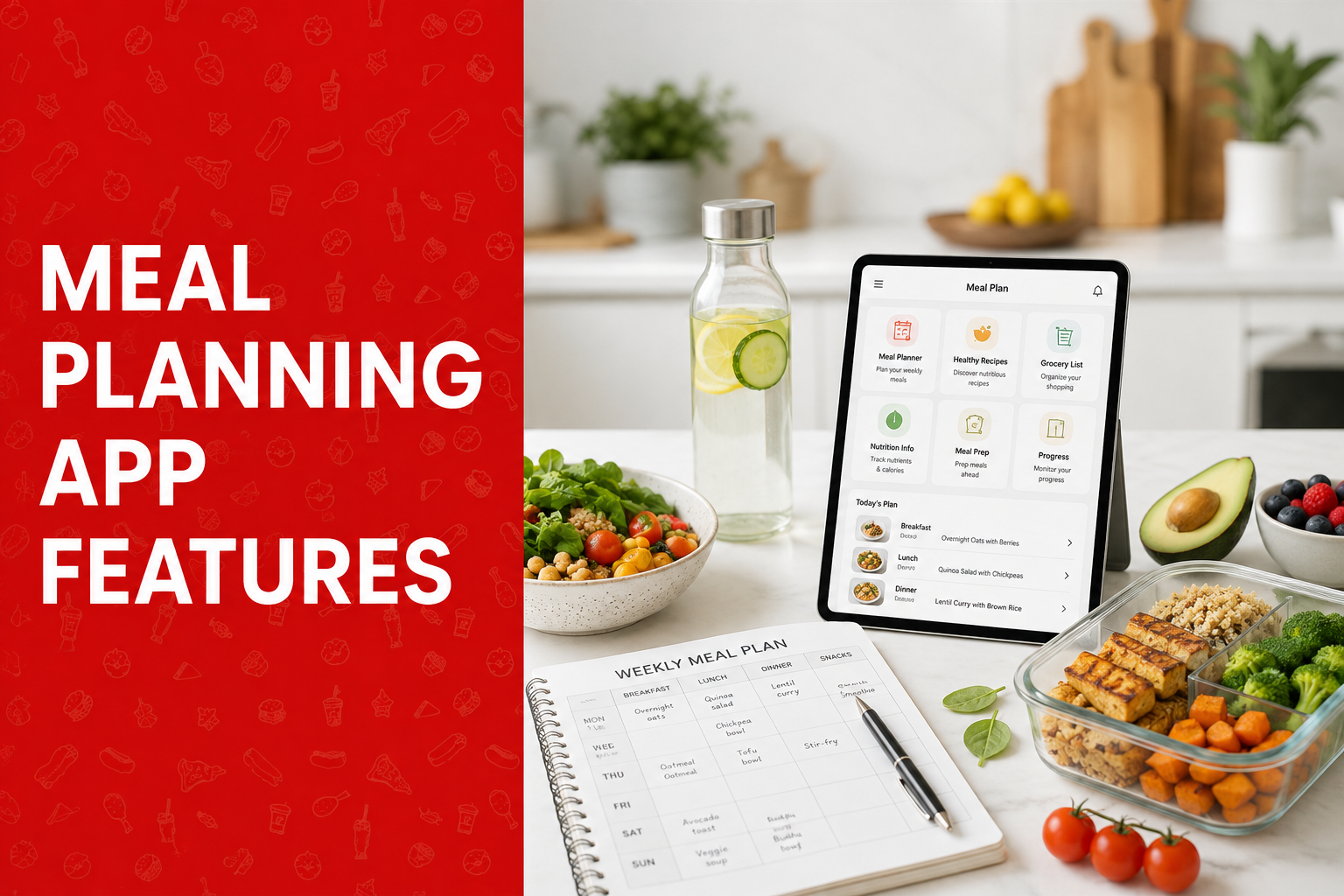
This is why the top meal planning software in 2026 is much more than just a meal calendar. They include recipe ideas, nutrition details, food shopping, and personalization in one place and eliminate the need to switch among the various tools. Foodsie does this more broadly by providing tools to meal plan, generate recipes, offer quick meal ideas, and give you nutritional information all in one spot.
But with so many apps promising to make eating easier, how do you know which features actually matter? So let's examine what you should be interested in, and of course you should be interested in the things that sound good and are also likely to make your week better!
What a good Meal Planning App should do?
Before separating the individual features, there is one basic test to keep in mind:
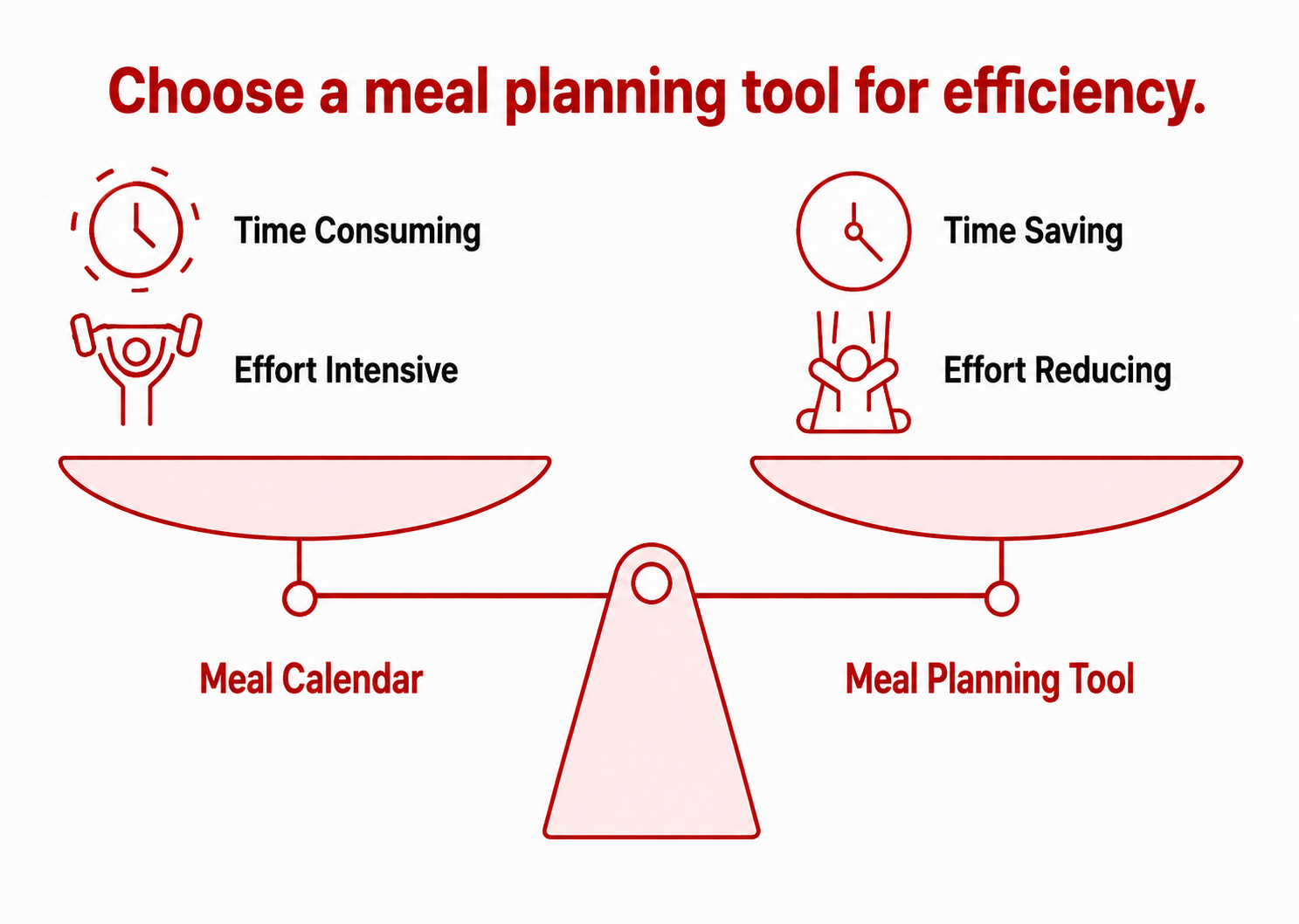
Is the application useful to save time?
You should not be given another list on which to keep track as part of the meal planner. It should relieve some effort on your part.
Consider the process. You have to figure out what to eat, have to figure out which meals to cook, have to do some checking on nutritional value, and then have to plan the ingredients you need when on-the-go, and then have to go to the grocery store, and then have to adjust it all when your plans change.
A useful app relays those steps, instead replacing them with a single process.
Here's the difference between a meal calendar and an actual meal planning tool that can help you.
Personalized Meal Planning
People have diverse dietary needs, and your meal plan shouldn't pretend otherwise. What is considered a "good" meal plan can vary by people, their schedules, their preferences, their foods of choice, their cooking skills, the size of the household, and their objectives.
Someone would not want a plan involving meals that take more than an hour to prepare if they arrived at the house at 7 pm. Similarly, preparing meals for the family when they have always had young children in the home is vastly different from that of someone who has prepared one meal for themselves.
These variances should be taken into account by the best meal planning apps.
The importance of personalization is that if you cannot follow the plan, then it will not work. The beauty of a 7-day plan is that if you are planning on making it on Wednesday, then the plan is useless.
Recipe Generation Should Answer To What Do I Cook?
What sometimes makes a person's cooking difficult is not the cooking.
It's the matter of choosing things to prepare.
You go to your refrigerator. After looking for one minute, you nod. After one minute, you nod. You close it. Then you reopen it, just in case something new suddenly turns up.
This is where a Recipe generator can truly help.
Traditional cookbooks and food blogs overflow with recipe suggestions, but an intelligent cookbook can help manage the selection process to propose meals given your ingredients, preferences, or type of ingredient.
Then you realize you don't have to get overwhelmed by recipes.
There's one other benefit too: you're not limited to just a few meals you're able to create.
With a good generator, you don't have to do all the searching yourself to introduce variation.
Nutritional Information You Can Actually Understand
Another time-saving aspect of meal planning apps is their nutritional analysis feature. This may seem obvious, but adults who want to gain insight into their eating patterns might not see it quite that way when they're in the kitchen. You might also like to know the calories, protein, carbohydrates, fats, fibre, or other nutritional information about food items.
The ability to calculate nutritional information can be a huge element that can make a difference for this reason. Everything is simple, though.
You shouldn't have to go through complicated nutrition data to understand what you're eating. A good app should present the information clearly and simply, making it easier to make informed food choices every day.
Ultimately, numbers are only useful when they convey something significant.
A Grocery List That Works With Your Meal Plan
One of the old approaches I think to meal planning is this…
The decision of what you're going to eat takes 20 minutes, and then the other 20 minutes is for figuring out what you need to buy.
Ughh! Frustrating, right?
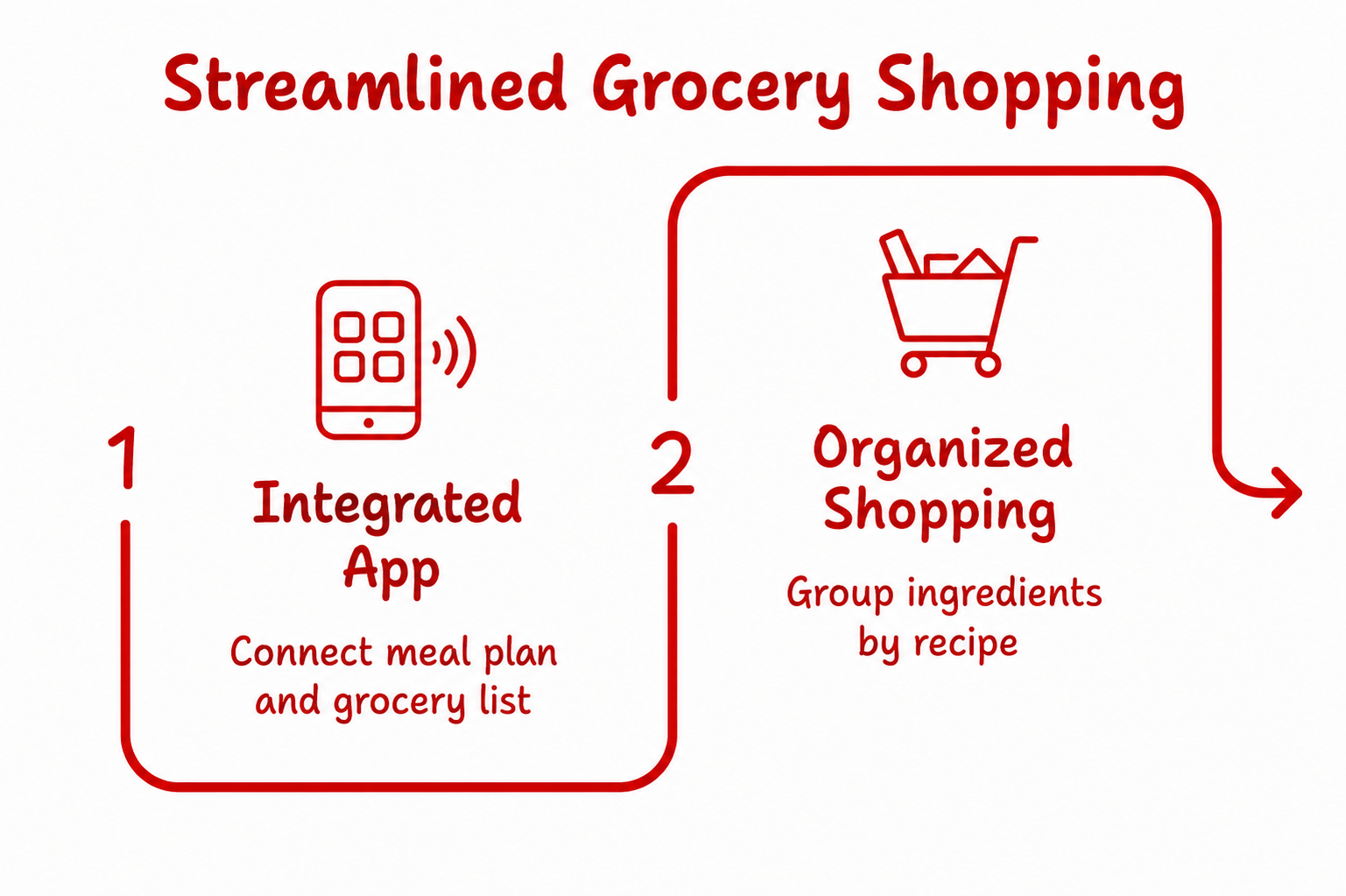
A good meal planning and grocery list application should be joined up. Having all your food ideas mentalized should make it much easier to organize your shopping. If possible, ingredients should be collected in the same container to avoid purchasing the same ingredient several times due to it being used in different recipes.
That's where tech can be marshmallow-like and make a splash.
You plan once. The rest of the shopping list is below.
Much better!
A Food Generator for Those Days When You Have No Idea What You Want
Sometimes you don't need to have a detailed plan…
All you need is a notion.
Perhaps you've craved something new from the food of your home. Perhaps you've got some ingredients in the kitchen that you don't want to waste. Or perhaps you simply wish to avoid cooking the same meal each week.
A food generator is a useful tool to end that routine. Some people like the extremely customized tips. But some people may want a little randomness.
That's where a recipe randomizer can come in handy. Rather than looking for a film that you already have in mind, you give it another possibility. You don't look for exactly what you're thinking; you simply give it another idea!
It will not make cooking a breeze for anyone, but at times a bit of spontaneity can be just what makes cooking interesting again.
Flexibility When Real Life Gets in the Way
This feature is easy to overlook because it isn't particularly flashy.
But it's one of the most important.
Your meal plan might say chicken on Tuesday. Then Tuesday happens.
You're exhausted.
You don't feel like cooking.
Or something unexpected comes up.
A good app shouldn't make you feel like you've failed your plan. You should be able to move meals, swap them, or adjust your week without starting from scratch.
Because real life isn't organized like a spreadsheet.
The best meal plan is not the one you follow perfectly. It's the one that can survive the days when things don't go according to plan.
Ingredient Awareness Can Make Meal Planning More Practical
So why not use a chart to see what food items you already have before purchasing more groceries?
Seems like a no-brainer, but you can't stop.
Backwards pushes a forgotten package of spinach. There is a half container of rice in the fridge. You buy into it more and more when you don't remember that it's there.
Consider an intelligent meal planning system to put in place to make available ingredients part of the planning process.
This can help to discourage waste and eliminate frivolous buying.
It will also totally remodel the way in which you plan your own meals.
Then, do not say, “What should I buy?”, you say “What can I create with what I have?”.
That's a much more concrete frame to start.
Recipe Variety Without Losing Personalization
A "variety" of sounds is awesome until one day the app starts recommending that you have a cupcake for dinner.
It's here that personalization and variety must combine.
You want new ideas, but not random ideas!
Ideally, a great App should enable you to find out about various meals but, in addition, just accept the preferences that you've created earlier.
Perhaps you like diversity of taste and cuisine but do not like hot food. Perhaps you have an interest in high-protein diets, but you may not want to consume the same foods day after day.
The intent is not to have a huge number of options.
This is done to provide you with some options.
It's a vast difference.
Family-Friendly Planning
It's pretty easy to plan for yourself.
Looking for an all-family package?
That's another story.
There are suddenly different preferences for, schedules for, fussy kids, school meals, work meals, and of course "I don't want that!" popping up somewhere.
Those differences ought to be easier to navigate via a meal planning application which caters to households.
An agreed-upon plan can ensure everybody is on the same page, and structured grocery information will help decrease the number of mental maneuvers required.
In all honesty, the more you take away the need to say “what’s for dinner?” the more you accomplish.
Simple Design Matters More Than You Think
An application can be artificial intelligence-driven, nutritional analysis and recipe generation, grocery automation, and anything that you can dream up.
If it's hard to use, no one will remain.
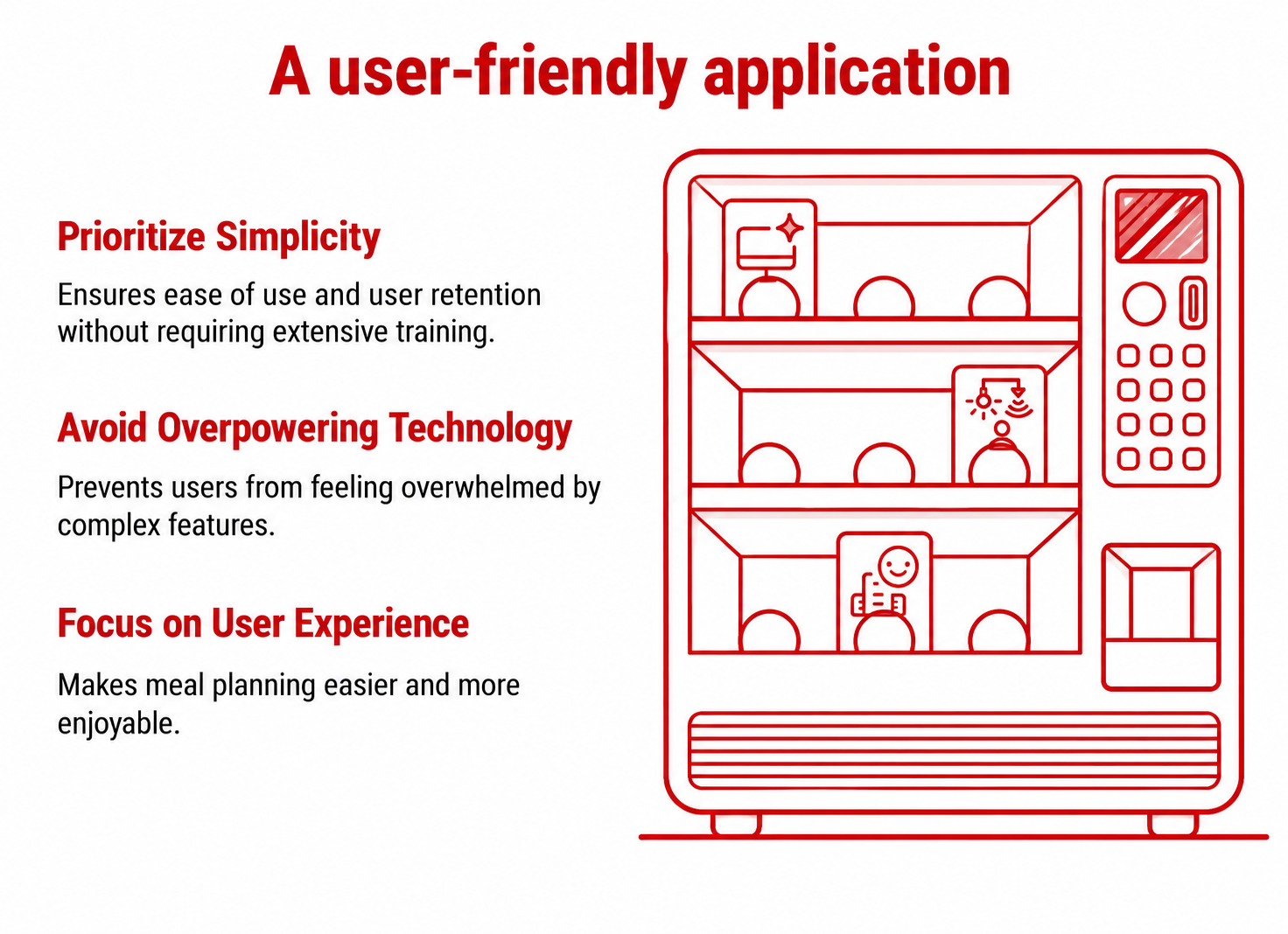
For this reason, simplicity should not be considered a drawback; rather, it's a desirable attribute in its own right. There should be no drill and practice required when using the application.
The technology should not overpower, nor broadcast messages out in force and in volume. The algorithm shouldn't be something you need to worry about. The only thing you'll notice is that it's made it easier to plan meals.
When that is the technology at work for what it's supposed to be at work.
Foodsie Brings Meal Planning, Recipes, and Nutrition Together
That's where Foodsie's methodology integrates well with the newfangled way of planning meals.
Foodsie isn't a stand-alone meal planning app but rather blends together various components of the food life cycle, including meal planning, recipe generation, easy-to-discover recipes and nutritional data.
That's important because real-life activities are linked to these activities.
If you begin by planning a meal, you will at some point decide you need a recipe for it; once you have it can you find out about its nutritional content; then, you have to figure out what ingredients you will need for the meal.
It can simplify everything if those attributes are inside one system that is geared towards food.
You're no longer continually asking yourself, "Where do I do that??" Instead, you focus more on what you're hungry for and what food you can decide on.
What Should You Prioritize When Choosing a Meal Planning App?
No app needs to come with all the features of the world. Consider what you really want to accomplish.
Deciding what to cook is your biggest headache; it's all about recipe ideas and recipe discovery.
For those interested in nutrition, look for good nutritional information and the capability to compute nutritional information.
When ordering food at the grocery is chaotic, check if the application could link up your meal arranging with your grocery list.
When looking into an expansion that involves family planning, flexibility and family-friendly organization might have more importance.
And, if you are just looking to ease your mind from spending 20 minutes every evening trying to decide what to eat, keep it simple every time.
Not every app that is the "best" in one place is in another.
It's the one that results in solving your own problem.
The Most Significant Factors In Meal Planning Apps in 2026?
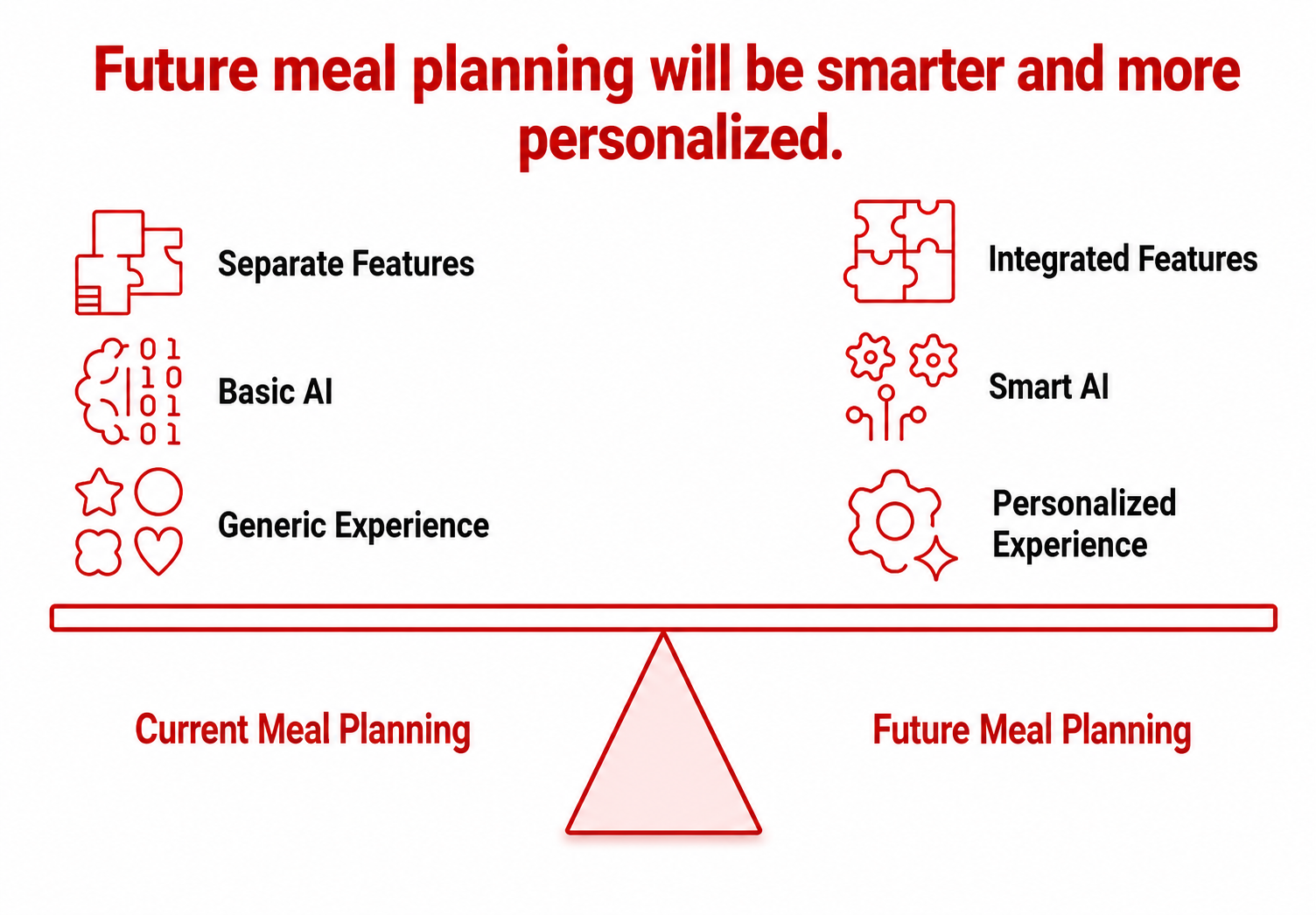
The biggest difference isn't having more features; It's having features that work together more intelligently. Functionality that operates more smartly jointly.
Instead of planning a meal in one location, then looking up the recipe in another, users want them to link to a nutrition calculator and an article that lists the ingredients in a grocery list.
AI has the potential to make a difference in that regard. It's not just about using AI, but also its value for the technology itself. The good part of it is that it is aware of a context and can make decisions that are important.
And it is likely that rather than getting a bit more organized, putting a bit more effort into meal planning, it's going to become more personalized, and actually more flexible, just how people live.
Conclusion
When selecting a Meal Planning App in 2026, it isn't all about abundance of features. It's all about that one that's going to make your life so much easier in general. Seek personification, recipe generators, nutritional info, grocery-list features, ingredient knowledge, choice (and lots of it), family planning, and most importantly, ease with real life.
Because you will have a different meal plan, your clock will be out of sync, and your body will crave different foods. That's normal. Those changes shouldn't be frustrating due to the wrong technology; It should make them more manageable.
Combining the picking and maneuvering through the many different aspects of food, such as food planning, discovering recipes, finding quick dinners, even viewing nutritional details, Foodsie is making mealtime a much more streamlined, satisfying experience.
If you're looking for the best meal planning apps, you don't need to ask which one is the feature-rich one. Ask a question from a different level:
“Will I go there next week and find it easier?”
If you said yes, you've just discovered a meal plan application you are going to be utilizing for that long.
Frequently Asked Questions
1. What are the most important features to look for in a meal planning app in 2026?
The best meal planning apps combine personalized meal planning, recipe generation, nutrition tracking, and grocery list creation in one place. Flexibility, ingredient awareness, and family-friendly planning are also valuable features. Most importantly, the app should save time and simplify everyday meal decisions.
2. How do AI meal planners personalize recipes for different dietary needs and family sizes?
AI meal planners analyze preferences, dietary requirements, cooking habits, and household size to suggest suitable meals. They can recommend recipes based on available ingredients, nutrition goals, and preparation time. This creates meal plans that are more practical and easier to follow.
3. Can meal planning apps really save time on grocery shopping and reduce food waste?
Yes, meal planning apps can automatically generate grocery lists from planned meals and organize ingredients efficiently. Many also consider ingredients you already have at home, helping you use them before buying more. This reduces unnecessary purchases, food waste, and time spent planning shopping trips. You can try Foodsie to explore such options.
4. Are there meal planning apps that work well for families with different tastes and schedules?
Yes, many modern meal planning apps are designed to accommodate multiple preferences and schedules within a household. They help organize meals, manage grocery lists, and adjust plans when needed. This makes it easier to coordinate family meals while reducing daily decision-making stress.
5. Why should I choose Foodsie for meal planning and recipe discovery?
Foodsie brings meal planning, recipe generation, nutritional insights, and meal inspiration together in one easy-to-use platform. Instead of switching between multiple apps, you can organize meals, discover new recipes, and make informed food choices in one place. If you're looking for a simpler way to plan meals and stay organized, Foodsie is designed to make the entire process easier.