How High-Fiber Foods Help with Digestion & Weight Management
2026-03-13
Introduction
A high fiber diet has long been recommended by nutritionists for supporting digestive health and maintaining a healthy weight. Yet a great number of people still underestimate how powerful fiber-rich foods can be in improving everyday well-being. Fiber is a key component in food processing in your body, whether it is ensuring that your digestive system runs smoothly or making you feel fuller.
Once individuals pay attention to high dietary fiber content, they tend to notice improvements in energy, appetite, and digestive comfort. However, it is easier to eat more fiber every day when you understand the reasons fiber is beneficial, and which foods to consume.
Throughout your reading journey, we will discuss the role of fiber in digestion and weight control, and how to incorporate high-fiber foods, snacks, and easy recipes into your diet without making complex adjustments.
Understanding Fiber: What It Is and Why It Matters
Fiber is a form of carbohydrate that is present in plant foods that cannot be fully digested in your body. As opposed to other carbohydrates, which are broken down into sugar, fiber is absorbed in the digestive system in almost its original form.
Fiber is an essential component that supports the body in many ways, highlighting its role in nutrition and health.
This may not appear significant, but it's exactly what makes fiber so beneficial.
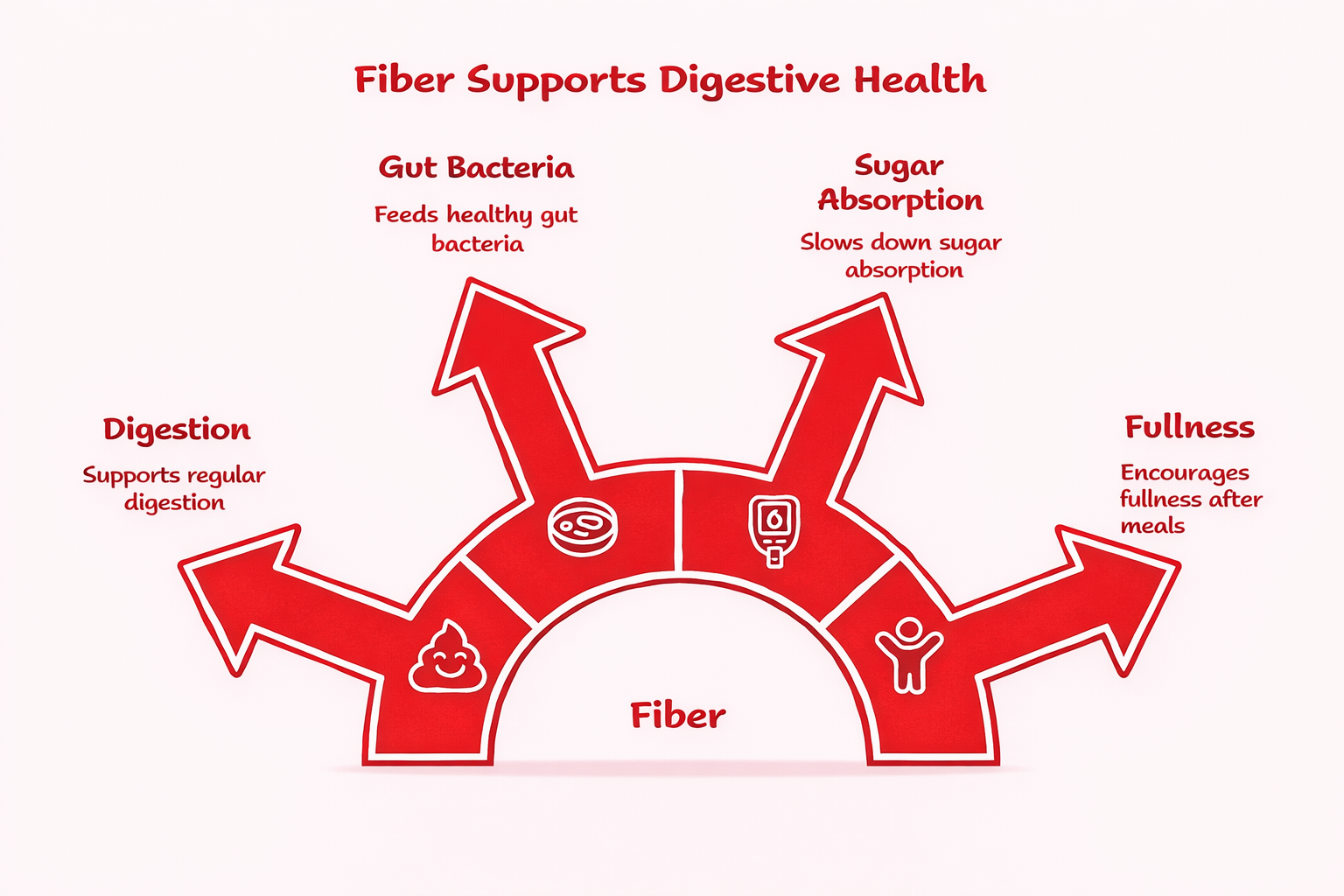
Fiber helps:
- Support regular digestion.
- Feed healthy gut bacteria.
- Slow down sugar absorption.
- Encourage fullness after meals.
Fiber exists in two major forms that help support your body.
Soluble Fiber
The soluble fiber is dissolved in water and produces a gel in the digestive tract. This aids in the slowing down of digestion to control blood sugar levels.
Examples of foods that contain soluble fiber include oats, apples, beans, lentils, and citrus fruits.
Insoluble Fiber
Insoluble fiber cannot be dissolved by water. Instead, it adds bulk to stool and helps food move efficiently through the digestive system.
Common sources include whole grains, nuts, seeds, vegetables, and high fiber bread.
The balanced combination of both kinds is what makes the best high fiber diet so powerful for overall health.
How Fiber Improves Digestion
Low fiber consumption is normally associated with issues of digestion, like bloating, constipation, and irregular bowel movements. The inclusion of more fiber can make a major contribution to the functioning of the digestive system.
Promotes Regular Bowel Movements
Fiber increases bulk and softness to stool, making it easy to move through the digestive tract. This will lower the chances of constipation and promote a healthy gut rhythm.
One of the first noticeable changes when someone starts following a high-fiber diet is improved bowel regularity.
Supports Gut Bacteria
There are trillions of healthy bacteria in your digestive system, allowing food to be digested and aiding immunity.
Fiber serves as food to these bacteria, promoting the proliferation of healthy microbes. A healthy gut microbiome assists in:
- Digestion.
- Nutrient absorption.
- Immune function.
Reduces Digestive Discomfort
Poor gut balance or slow digestion causes many digestive problems. Fiber also aids in the normalization of food transit speed in the intestines, which can decrease discomfort after eating, for instance, bloating or a feeling of weight gain.
Eating high fiber foods on a regular basis can help make the digestive process of the day smoother.
Key Benefits of Fiber for Gut Health:
- Helps produce short-chain fatty acids (SCFAs) that protect the gut lining.
- Supports better blood sugar control by slowing carbohydrate absorption.
- Enhances mineral absorption, including calcium and magnesium.
- Aids in toxin elimination by binding waste in the digestive tract.
- Supports healthy weight management by promoting satiety.
- May reduce the risk of digestive disorders such as IBS and diverticulosis.
How Fiber Supports Weight Management
Fiber is not only healthy for digestion, but it may also support weight management, making being skinny a lot easier.
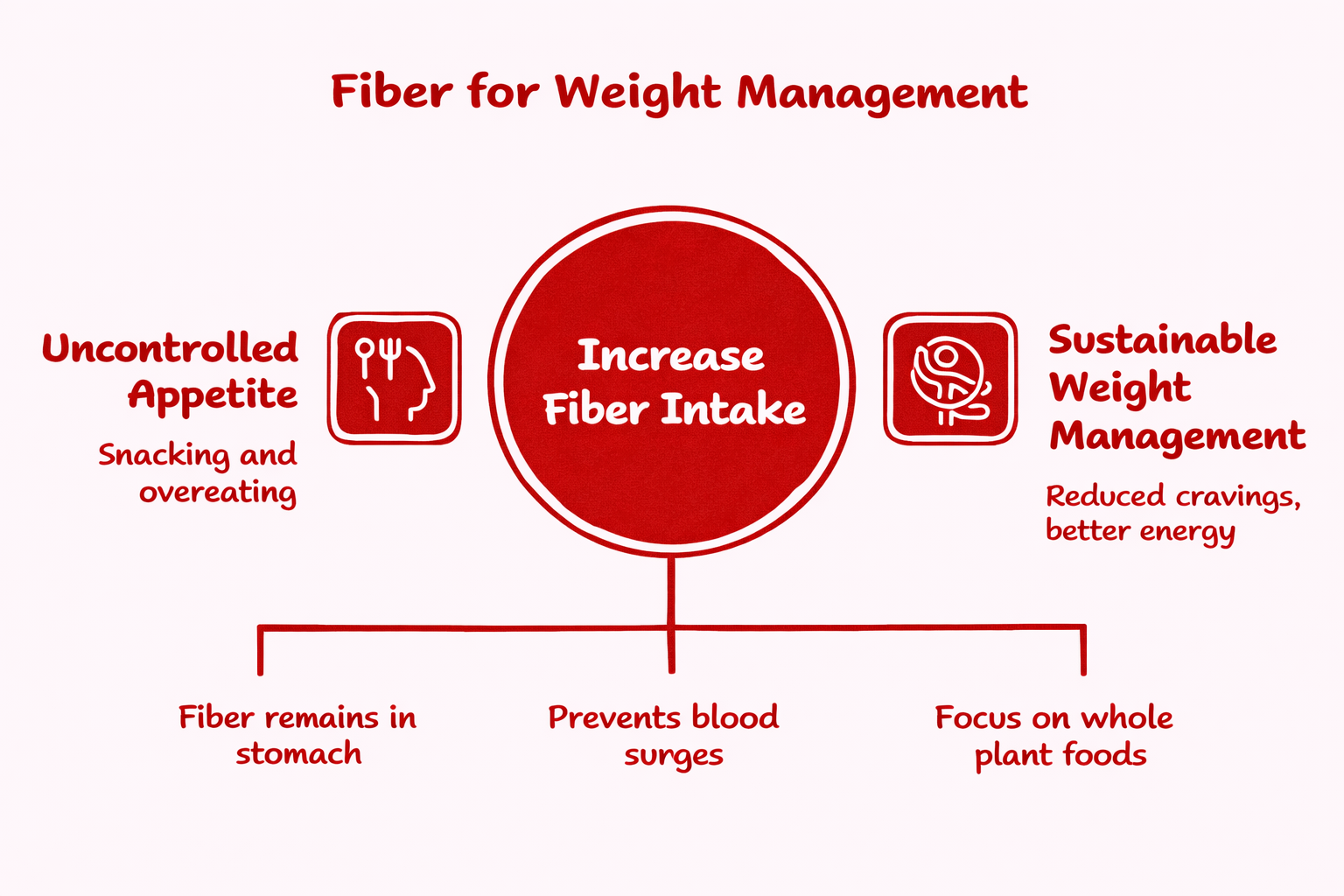
Individuals with higher fiber intake will be satisfied with smaller portions and will not snack so often. Here's why.
Fiber Helps You Feel Full Longer
Foods that contain fiber are also more difficult to chew and digest. Due to this, they remain longer in the stomach, giving a feeling of fullness. This innate appetite can be used to curb unneeded calories.
Many fiber-rich foods are naturally lower in calories while still providing volume and nutrients, which is why they are often included in diets focused on low-calorie foods that keep you full & help you lose weight and achieve sustainable weight management.
Slows Sugar Absorption
Fiber reduces the speed of sugar absorption into the bloodstream. This will help prevent sudden surges and drops in the level of blood sugar.
Maintaining blood sugar levels frequently implies
- Fewer cravings.
- Better energy levels.
- Improved appetite control.
Encourages Healthier Food Choices
The majority of the best high-fiber foods are products of whole plant foods, including fruits, vegetables, grains, and legumes. These are healthier foods that are more nutrient-filled naturally with less processed sugars and fats.
People naturally lose weight when they pay attention to fiber-rich foods.
Many of these foods are also considered healthy carbohydrates. You can learn more about healthy carbs for weight loss and which ones to include in your diet to maintain balanced nutrition.
Best High in Fiber Foods to Add to Your Diet
You do not need to make radical transformations to add fiber to your diet. Most of the foods that we consume on a daily basis are good sources.
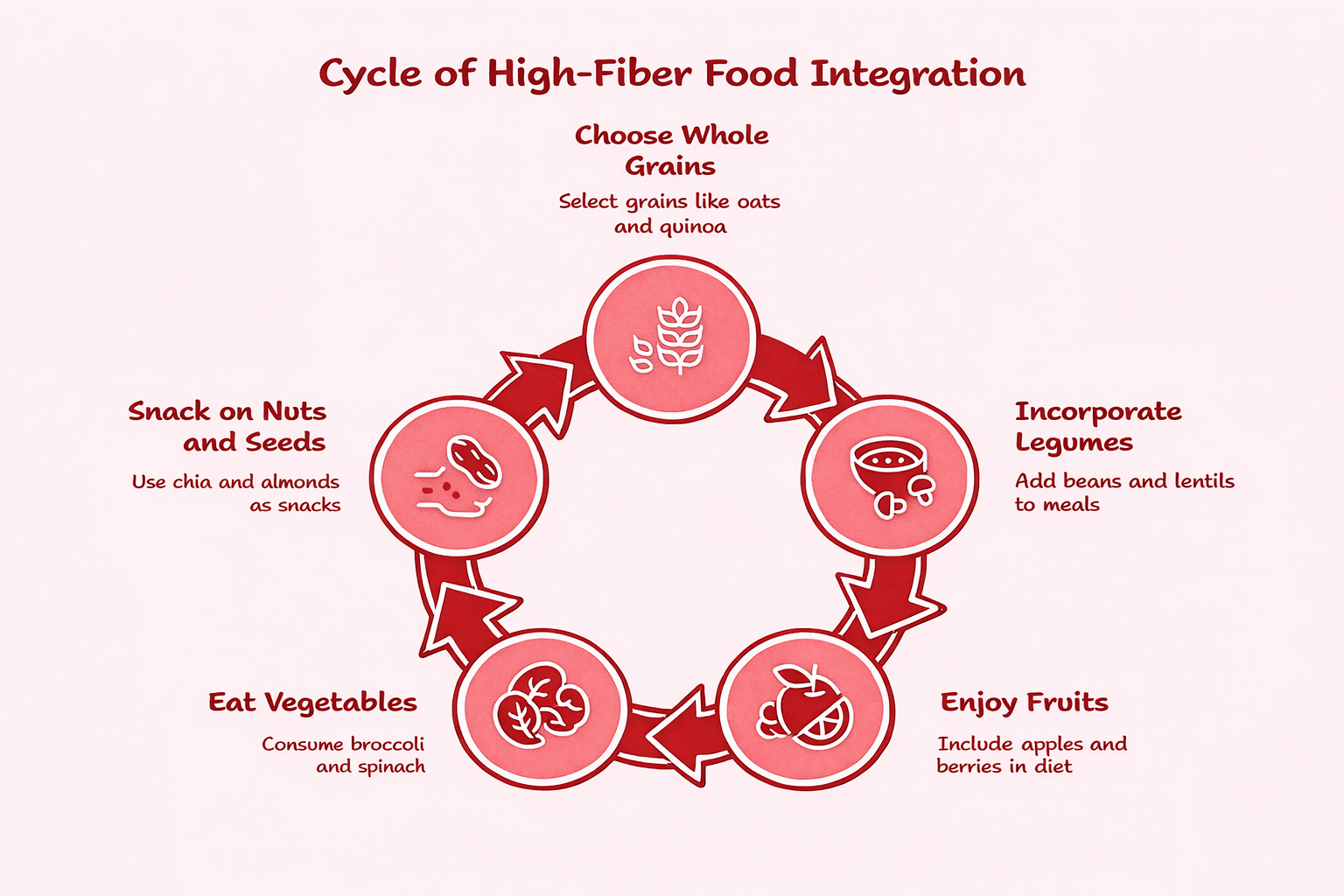
High fiber foods are some of the best foods, and they include:
Whole Grains
Whole grains do not lose the outer layer of bran, in which the majority of the fiber is locked.
Examples include:
- Oats.
- Quinoa.
- Brown rice.
- Barley.
- Whole wheat products.
- High fiber bread.
Legumes
Legumes are also one of the richest sources of fiber, and they are also a source of protein.
Common choices include:
- Lentils.
- Chickpeas.
- Black beans.
- Kidney beans.
- Split peas.
Fruits
Fruits are naturally high in fiber, containing both soluble and insoluble fiber.
Great options include:
- Apples
- Pears
- Berries
- Bananas
- Oranges
Vegetables
Vegetables are a source of fiber, as well as the necessary vitamins and minerals.
Vegetables that contain high-fiber content are:
- Broccoli
- Carrots
- Sweet potatoes
- Brussels sprouts
- Spinach
Nuts and Seeds
Even the small portions can be a source of significant fiber.
Popular options include:
- Chia seeds
- Flaxseeds
- Almonds
- Sunflower seeds
It is easy to stick to a high fiber diet lifestyle, adding a variety of these foods during the week.
If you want to explore more options, check out this detailed guide on the best high-fiber foods to add to your diet that can naturally improve digestion and support long-term health.
Easy High Fiber Meals for Everyday Eating
A lot of individuals believe that it takes complex food preparation to consume a lot of fiber. Actually, all that needs to be done is to make minor changes in the way dishes that are used daily are prepared to make them high fiber meals.
Here are some easy examples.
Breakfast Ideas
One of the simplest meals that can be used to increase fiber intake is breakfast.
Examples include:
- Oatmeal with berries and chia seeds on it.
- Whole-grain toast/ high fiber bread with avocado.
- Yogurt with granola and sliced fruit.
Lunch Options
Fiber-rich food can be added to lunch to keep you energized for the rest of the day.
Examples include:
- Quinoa vegetable bowls.
- Whole-grain bread and lentil soup.
- Chickpea salad wraps.
Dinner Meals
Dinner is an occasion where one can combine protein sources, vegetables, and grains altogether.
Easy meal plans of high fiber may include:
- Roasted vegetables and brown rice.
- Whole wheat pasta and vegetables.
- Quinoa vegetable stir fry.
These dishes are really substantial, healthy, and can be made even within a hectic schedule.
High Fiber Snacks That Keep You Full
Snacking is a habit that predisposes individuals to unhealthy eating, but consuming fiberous snacks can help individuals stay hungry between meals.
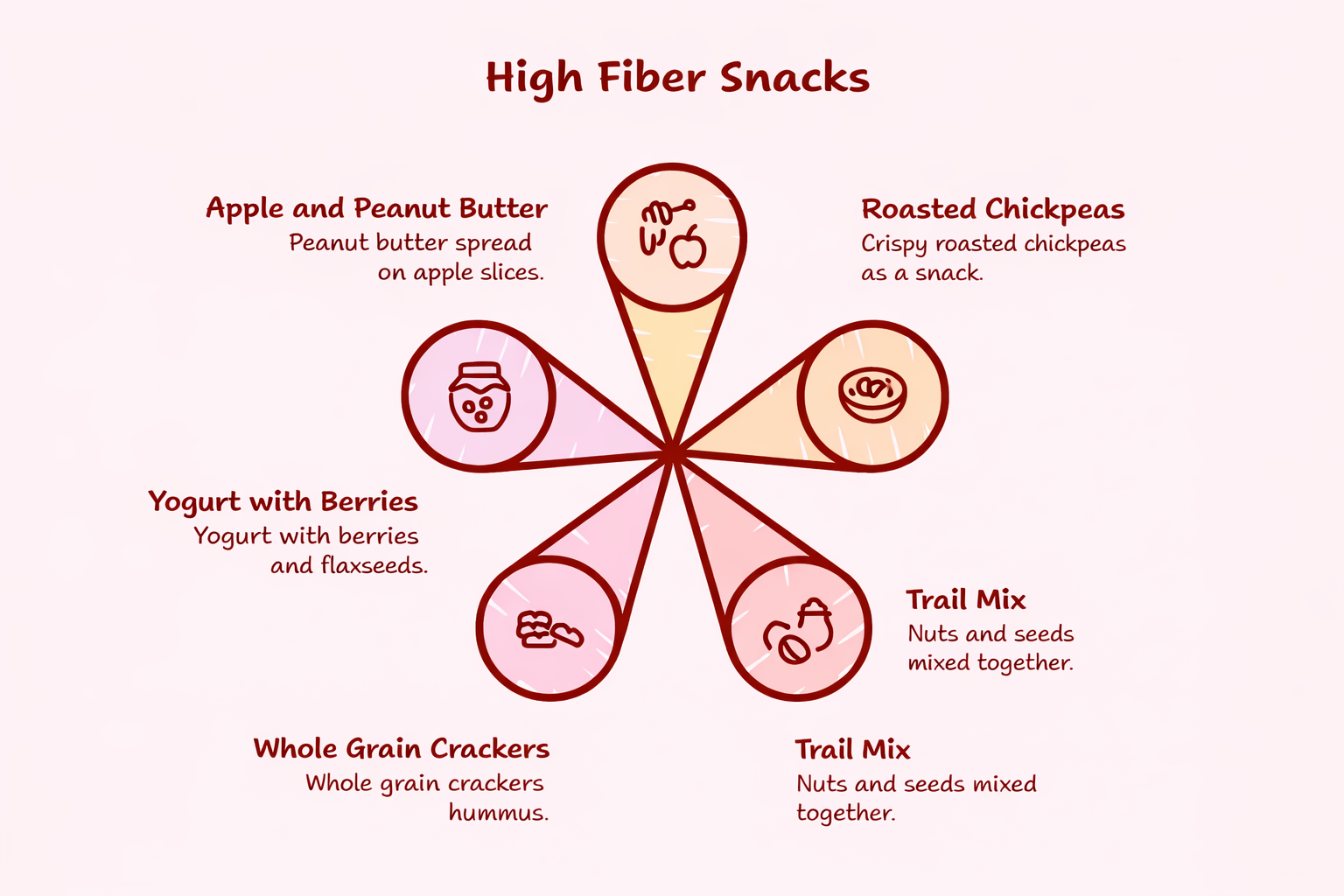
Examples of some convenient high fiber snacks are:
- Peanut butter on slices of apple.
- Roasted chickpeas.
- Tail mix with nuts and seeds.
- Crackers made of whole grain with hummus.
- Yogurt containing berries and flaxseeds.
Fiber slows down digestion, hence these snacks keep one from experiencing sudden hunger, which causes overeating in the future.
Simple High Fiber Recipes You Can Try
It is not necessary to complicate cooking fiber-rich meals. Even the simplest food can provide a lot of fiber.
Some of the simple recipes with high fiber are:
Lentil Vegetable Soup
A warming lentil, carrot, and tomato soup. Lentils will give a strong fiber boost and give the addition of plant protein too.
Chickpea and Avocado Salad
An avocado, lemon dressing, cucumber, and chickpea quick salad. It is invigorating, satisfying, and high in fiber.
Oatmeal Energy Bites
Snacks prepared using peanut butter, honey, and chia seed oats. These snacks are ideal for providing energy throughout the day.
One should also consider trying new dishes on a regular basis so that fiber-rich dieting can be enjoyable and sustainable.
Making High Fiber Cooking Easier
This is one of the difficulties that a lot of individuals encounter in choosing what to prepare using fiber-rich foods. Planning can be daunting when you have healthy foods in your kitchen, yet you do not know how to create a meal out of them.
It is in this area that intelligent recipe tools become useful.
When you have such ingredients as oats, beans, vegetables, or whole grains at home, you can immediately find new recipes with high fiber with the Foodsie Recipe Generator. The tool will generate meal ideas that can be cooked immediately by typing in the ingredients you already have.
This is a simple method for preparing delicious meals using everyday pantry items, which are also high in fiber, and it doesn't require hours to search for recipes
Tips for Increasing Fiber Without Digestive Discomfort
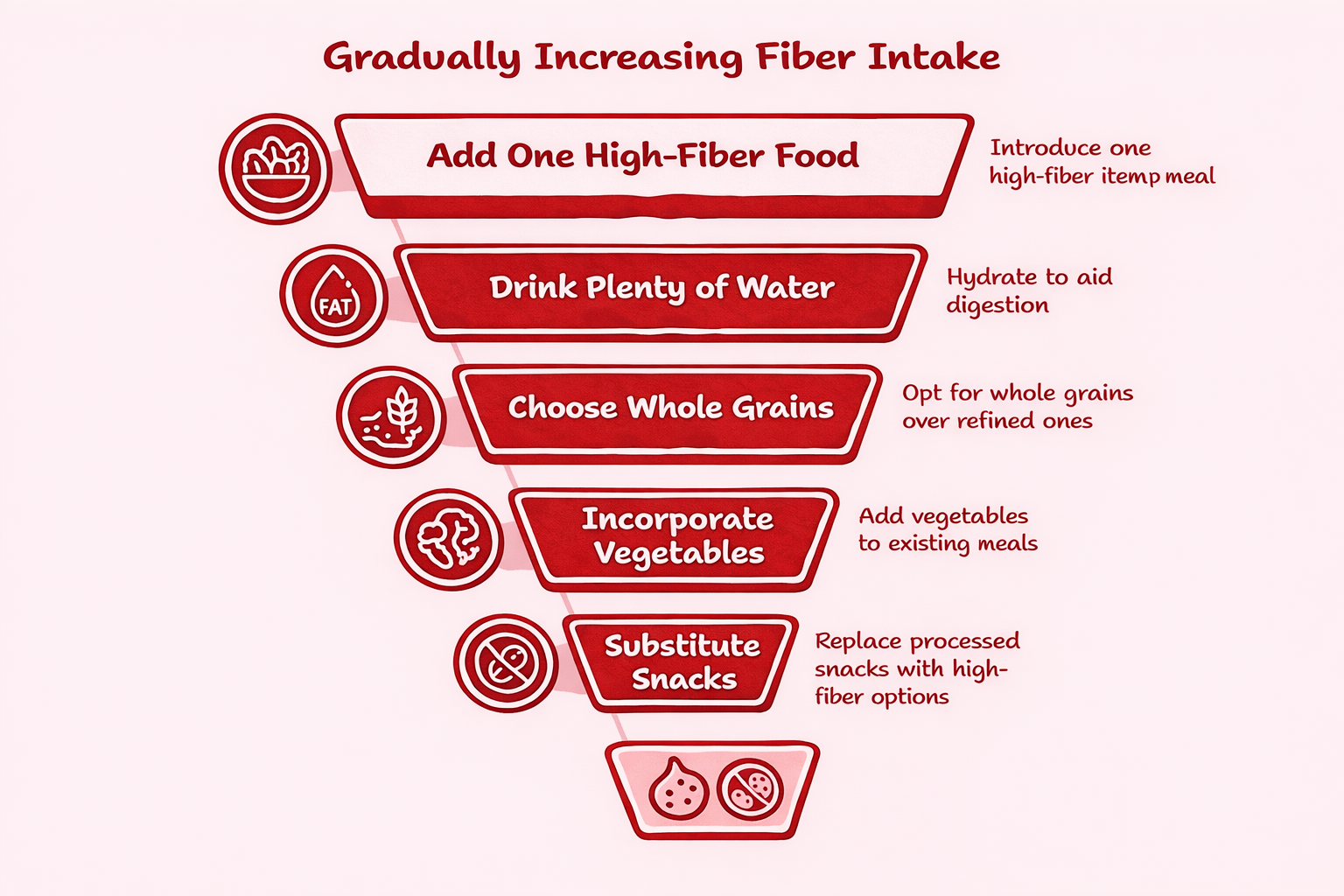
If you are not used to consuming high levels of fiber, you might experience temporary bloating or gas as you increase your intake. A gradual increase in the fiber is the most appropriate.
Here are some helpful tips:
- Begin with one food that is high in fiber per meal.
- Take a lot of water during the day.
- Use whole grains rather than refined grains.
- Incorporate vegetables into already prepared meals.
- Substitute processed snacks with high fiber snacks.
You can anticipate that your digestive system will gradually find its balance over time, and the benefits in the long run make the adjustment worthwhile.
Conclusion
Fiber is also one of the least complicated and most effective nutrients that enhance digestion as well as weight management. Eating more foods with high dietary fiber in your daily meals can help sustain a healthy gut, even and steady energy levels, and stay satisfied after eating.
The exceptionally high-fiber foods consist of whole grains and legumes, along with fruits and vegetables, which are all easily available and can be included in daily meal preparation. Balanced high fiber meals, high fiber recipes that are easy to make, and high fiber snacks that satisfy hunger make it both convenient and pleasant to remain on a high fiber diet.
If you're looking for cooking inspiration, applications like the Recipe Generator from Foodsie can assist in transforming even healthy ingredients into more flavorful dishes. Even minor alterations in your food habits today can produce long-term changes in your digestive system, energy, and health.
Frequently Asked Questions
What is the recommended daily fiber intake?
Adults should aim for 25-38 grams of fiber per day, depending on age and gender: women under 50 need 25-28 grams, men under 50 need 31-34 grams, with slightly lower amounts for those over 50. This intake supports digestion and weight management.
What is the difference between soluble and insoluble fiber?
Soluble fiber dissolves in water to form a gel that slows digestion, controls blood sugar, and lowers cholesterol; sources include oats, apples, and beans.
Insoluble fiber adds bulk to stool for regular bowel movements and prevents constipation; it's found in whole grains, nuts, vegetables, and seeds.
How can fiber help with weight management?
Fiber promotes satiety by slowing stomach emptying and digestion, reducing overall calorie intake and snacking.
It also slows sugar absorption to stabilize blood sugar, curbing cravings and supporting steady energy. High-fiber whole foods like fruits, veggies, and legumes naturally displace calorie-dense options, aiding sustainable weight loss.
How do I increase fiber intake without bloating or gas?
Start gradually by adding one high-fiber food per meal to let your gut adjust, and drink plenty of water to help fiber move through the system.
Choose whole grains over refined, incorporate veggies into meals, and opt for fiber-rich snacks like nuts or fruit.