
Weekly Meal Planning Made Easy With AI
2026-06-20
A lot of individuals begin meal planning well-intentioned. They take time to pick different recipes, write shopping lists and plan a week's worth of meals. However, the plan can be derailed by an unexpected schedule change, the fact that plans have not been prepared, or fatigue after a few days. Soon before you even know it, it's a "take out" instead, food goes out of the dish, and the planning process is completely forgotten.
In the real world, there's barely any time left to make meal plans, keep track of nutrition and make a list of groceries by hand. Foodsie is here to change that. Foodsie's intelligent planning features, nutritional information, and AI-driven meal suggestions make meal planning so easy and efficient that you can get it done in mere minutes each week.
This guide will explore the reasons behind the failure of traditional meal planning, the impact of AI on meal planning, and how Foodsie's intelligent tools can make the process of planning your meals for the year more enjoyable.
Why Is Meal Planning So Difficult for Most People?
Most people don't struggle because they lack motivation. They struggle because meal planning requires dozens of small decisions that quickly become overwhelming.
There are choices of food to be made, the need to know what is available, and to make sure that they have the right nutrients, plan trips to the grocery store, and take into account family preferences and schedules.
That's a lot of brainpower to go into making a food decision.
Perhaps that's why many people start a good way every week, but with the weekends come back eating outside, skipping meals, or whatever it is they can just get away with. It's not a matter of discipline. It's the planning process that itself.
If it seems overwhelming to plan meals, consistency is hard to achieve.
How AI Is Transforming Modern Meal Planning
The world is witnessing the emergence of a new kind of daily life management and artificial intelligence is shaping the way in which food is planned.
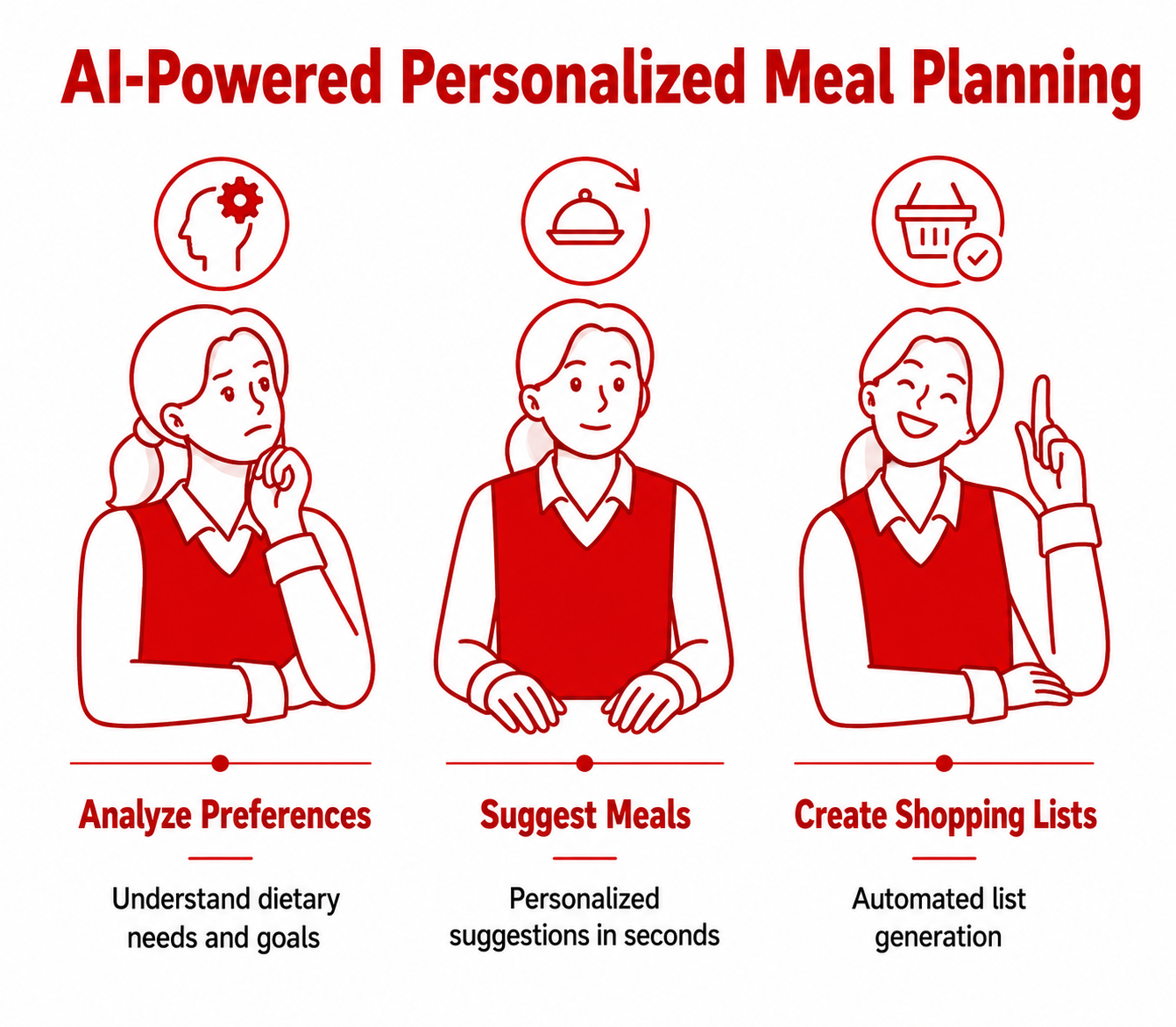
AI can analyze preferences, dietary needs, nutritional goals, and available ingredients, providing highly specific suggestions in seconds, rather than having to go through the trouble of researching ingredients and meals and then manually creating a weekly menu.
Instead of spending hours on end finding food and meal ideas, AI can create personalized ideas from your preferences, dietary requirements, nutrition goals, and fridge contents in no more than a few seconds.
Think about the amount of time online you spend looking at meals, counting calories in and out, and creating shopping lists. That much of the grunt work is taken away from the users while they retain control.
This leads to a smarter, faster, and even more personalized meal planning experience that matches a real-life calendar instead of imposing users into a system.
The Hidden Benefits of Planning Meals Ahead
Many people associate meal planning with saving time, but the benefits go much further than convenience.
The primary benefit of this is minimizing decision load. With a planned meal, you remove dozens of food decisions each day, which usually involve harmful eating habits.
Planning also helps people become more intentional about nutrition. Instead of making food decisions based on convenience, they can align meals with specific goals such as improving overall health, maintaining energy levels, or following structured meal plans for weight loss.
Financially, meal planning can also make a noticeable difference. Purchasing ingredients with a clear purpose reduces unnecessary spending and helps minimize food waste throughout the week.
Perhaps most importantly, meal planning creates consistency. And consistency is often the foundation of long-term success, whether your goal is better health, improved nutrition, or simply a less stressful week.
Can AI Personalize Meal Plans for Different Dietary Goals?
Absolutely!
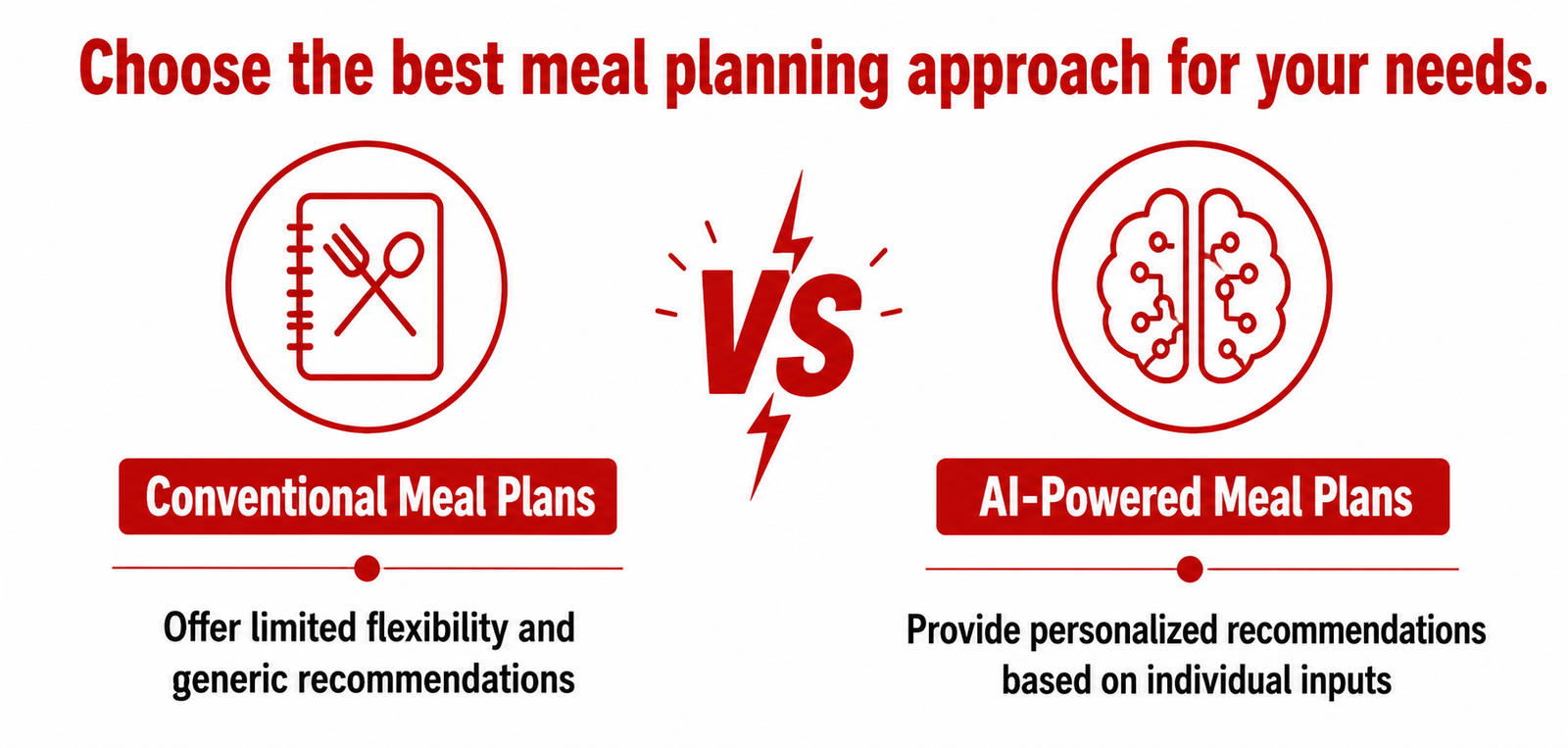
One of the biggest problems with using the traditional meal plan method is that little variation in recommendations is offered. Every household is unique, having their personals preferences, timetables, and food choices.
While a keto diet meal plan may have different nutritional objectives for someone on a keto diet, a person who is preparing balanced family meals will have different objectives. Likewise, people aiming for an 1100 calories daily diet plan might need to mind their diet and the proportions they consume.
AI-powered tools can help fill this gap by providing recommendations that aren't based on assumptions but on individual inputs.
By providing personalized recommendations based on the user's selected diet, users can save hours of trying to find good ideas for their diet, ensuring a more realistic and sustainable eating plan.
Foodsie Meal Planner: Smarter Weekly Planning Without the Guesswork
Foodsie's centerpiece is the Foodsie Meal Planner, which simplifies all elements of planning meals.
The planner helps them schedule meals without having to manually do that, taking the user's preferences and lifestyle into account. Users can select their favourite food, alter meal patterns, and customize each meal to the changes to the user's objective.
The whole experience is not the typical planning experience, but it feels more like you have a digital assistant who knows your diet.
The best part of the Foodsie Meal Planner is its flexibility. Life changes quickly. Meetings are late, plans change, and appetites change. The planner lets users change without having to reschedule the whole week, thus saving users from having to start from scratch.
The automation and control balance is how AI-powered planning works to effectively support real-world applications.
How a Recipe Generator Makes Weekly Planning Faster
One challenge when planning meals is that you just don't know what to plan next.
Few families have a variety of food choices since it takes time to find new foods. After a while, the diet starts to become a routine, and people begin to get frustrated and stop sticking to it.
This is where Foodsie's Recipe Generator comes in handy, enabling users to explore new meal ideas with the available ingredients and their preferences.
Users can discover new ideas in seconds, without getting stuck looking for ideas on websites and social media. This will also save time and reduce the amount of ingredients wasted by making use of what is already available.
The outcome is a plan that is not monotonous and draining, but stimulating and efficient
Why a Recipe Builder App Is Becoming Essential for Modern Households
The way people manage food has changed dramatically over the last decade.
It's common for many people living today to have busy work routines, child responsibilities, fitness targets, and school activities. In such a setting, it becomes difficult to do things in a systematic manner using handwritten meal plans or random notes.
A recipe builder app provides a centralized system where meal planning, recipe discovery, and nutritional awareness can work together.
Users can optimize the workflow to a single platform, rather than dealing with several tools and resources.
This kind of organization is particularly beneficial for busy families who make it a goal to keep healthy habits going during the busy times.
Supporting Family Meal Plans Without the Weekly Stress
Planning meals for one person can be challenging. Planning for an entire family is a completely different experience.
Different preferences, dietary restrictions, and schedules often create friction during the planning process. What works for one family member may not work for another.
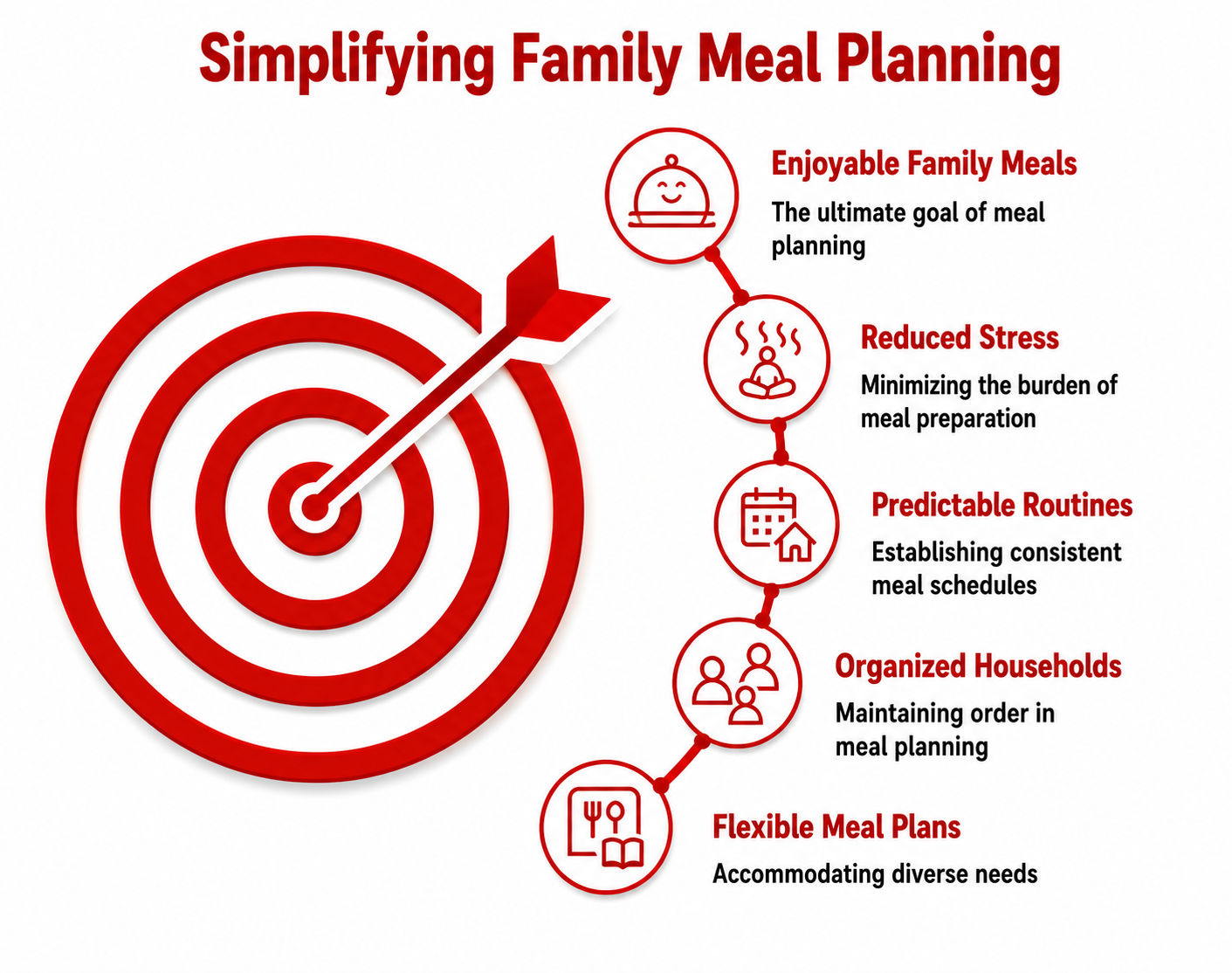
Foodsie helps simplify this complexity by supporting flexible family meal plans that can accommodate varying needs without requiring multiple separate planning systems.
This makes it easier for households to stay organized, reduce last-minute decisions, and create more predictable weekly routines.
When everyone knows what's planned ahead of time, meals become less stressful and more enjoyable.
How Meal Planning Supports Weight Management Goals
A lot of people start planning meals since they desire a greater handle on their eating behaviors.
Planning provides a structure that can help make better choices, whether you're trying to improve nutrition, follow through on consistency, or trying to design a weight-loss meal plan.
It's easy to go with the flow and grab any convenient food or make all kinds of choices when hunger pangs hit, without a plan. Once you have a plan, it's much easier to make healthy choices.
AI also comes in handy in the way that it can help the users sync up the meals with the specific objective of the user and save a lot of time organizing it manually.
This design and functionality can prove to be a significant advantage in the long run.
Reducing Food Waste Through Smarter Planning
Even in every house of this world food waste is a substantial issue.
Many ingredients are bought with the best of intentions, only to not be used in the final meal plan due to many reasons, including the complexity of the meal preparation.
This can be helped by smart planning tools, which establish better relationships between shopping and meal plans.
By planning the meals with intent and making intelligent recommendations, ingredients will be used more efficiently throughout the week.
This will save money and promote more sustainable habits in the home.
What Should You Look for in a Meal Planning App?
Not all planning tools are created equal.
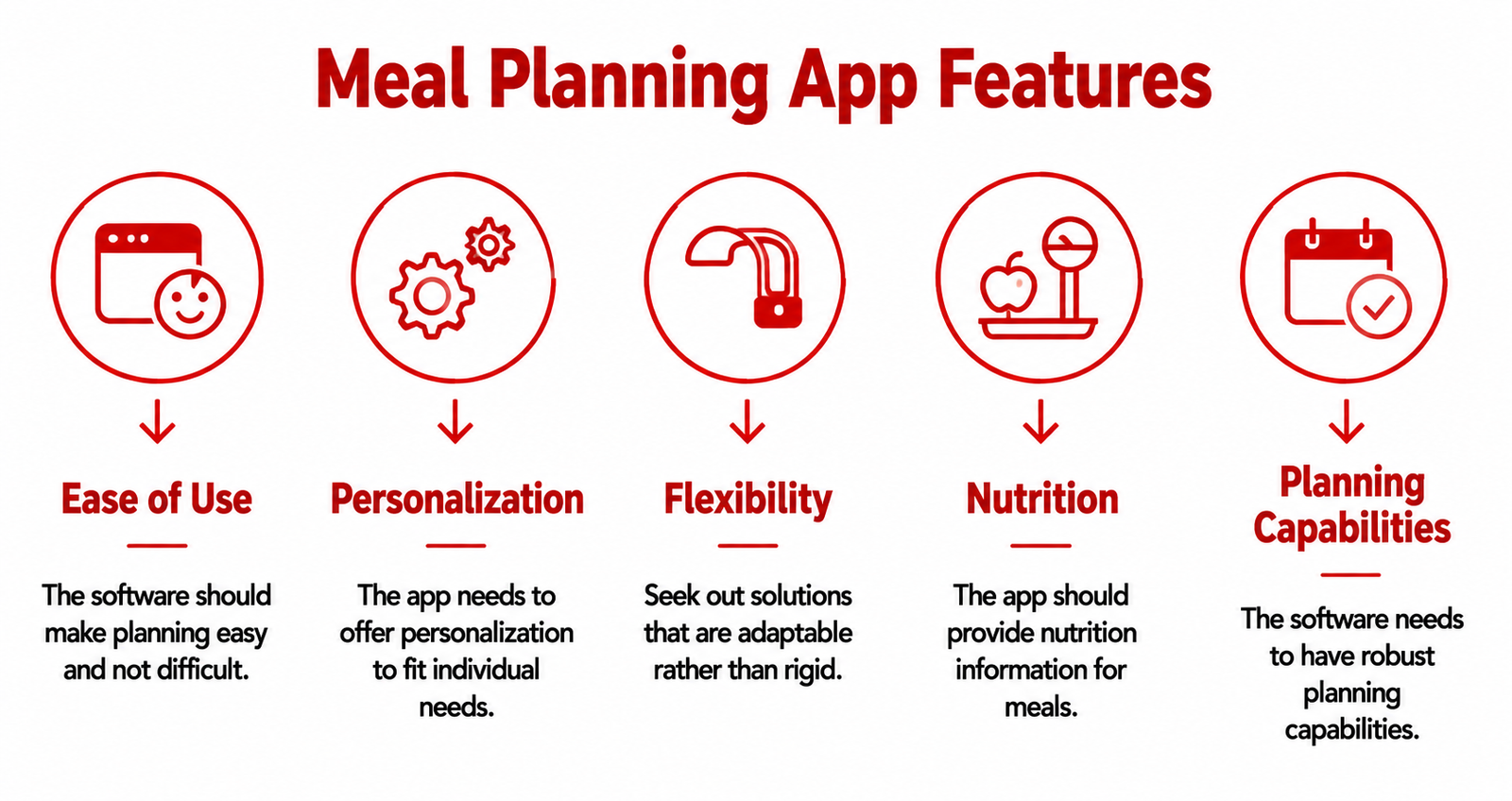
The best meal plan software should make planning easy and not difficult. It needs to offer personalisation, flexibility, nutrition and planning capabilities.
Seek out solutions that are adaptable rather than rigid. The best platforms will bend to your will, not the other way around.
What sets Foodsie apart is its ability to bring together all these aspects of meal planning, nutrition, ingredient discovery, and AI recommendations, all in one place!
This integrated planning process overcomes many of the common frustrations of traditional planning processes.
Smart Personalized Meal Planning
The future of food technology isn't about replacing human decisions. It's about making those decisions easier.
Platforms powered by AI are assisting users in saving time on organizing meals and more on enjoying them. Smart systems can limit the choices for users, rather than giving them so many choices that they can't decide, they can filter the choices for them based on what will actually fit their needs.
As personalization continues to improve, meal planning will become even more intuitive, helping individuals and families maintain healthier routines without sacrificing convenience.
For many households, that future has already arrived.
Conclusion
It's not another task that's too much to add to the long list of things you need to do every week. It can be one of the easiest habits to form to promote health, schedule and overall well-being if the proper tools are used.
Foodsie eliminates a lot of the hassle that usually comes with meal planning with the help of artificial intelligence. It provides details of personalized tips and recommendations, intelligent scheduling, recipe discovery, and nutritional support, making the process less complicated and more routine.
When you're looking to save time when planning meals and more time enjoying them, it's time to look at how Foodsie can change the way you plan your meals. Begin forming better habits now and week by week, it gets easier and easier.
Meal planning doesn't have to feel like another chore on your to-do list. With Foodsie, you can spend less time figuring out what to eat and more time enjoying meals that fit your lifestyle. Sign up today and see how simple planning your week can be when the hard work is already done for you.
Frequently Asked Questions
What is a digital meal planner, and how does it help with meal planning?
A digital meal planner is an online tool or app that helps you organize meals, create shopping lists, track ingredients, and schedule your weekly menu. It simplifies meal planning by keeping everything in one place, reducing food waste, saving time, and making it easier to stick to your nutrition goals.
What to cook with ingredients I have?
If you're wondering what to cook with ingredients you have, Foodsie can instantly recommend recipes based on the ingredients already in your kitchen. This helps reduce food waste, save money, and make meal decisions faster. Try Foodsie today to discover personalized meal ideas in seconds.
3. What features make the best AI meal planning app for busy families?
The best AI meal planning apps for families offer grocery-list quality, shared ingredient optimization, dietary flexibility, smart ingredient overlap tracking, and budget support in one platform. Key features include shopping list integration, real-time meal tracking, recipe customization, the ability to accommodate varying dietary restrictions, and flexibility to adjust plans without restarting the entire week.
4. How does an AI recipe generator from ingredients work?
An AI recipe generator from ingredients analyzes the ingredients you enter and matches them with suitable recipes. It can also consider dietary preferences, cooking time, and nutritional goals to provide personalized meal recommendations.
5. How do I start using AI meal planning with Foodsie?
Start your smart meal planning journey today by visiting Foodsie's Meal Planner to create personalized weekly plans with AI-driven recipe suggestions, nutritional information, and automated shopping lists in just minutes. Foodsie's intelligent planning features eliminate decision fatigue while providing flexible family meal plans that accommodate different preferences and dietary needs, making consistent healthy eating easier than ever.