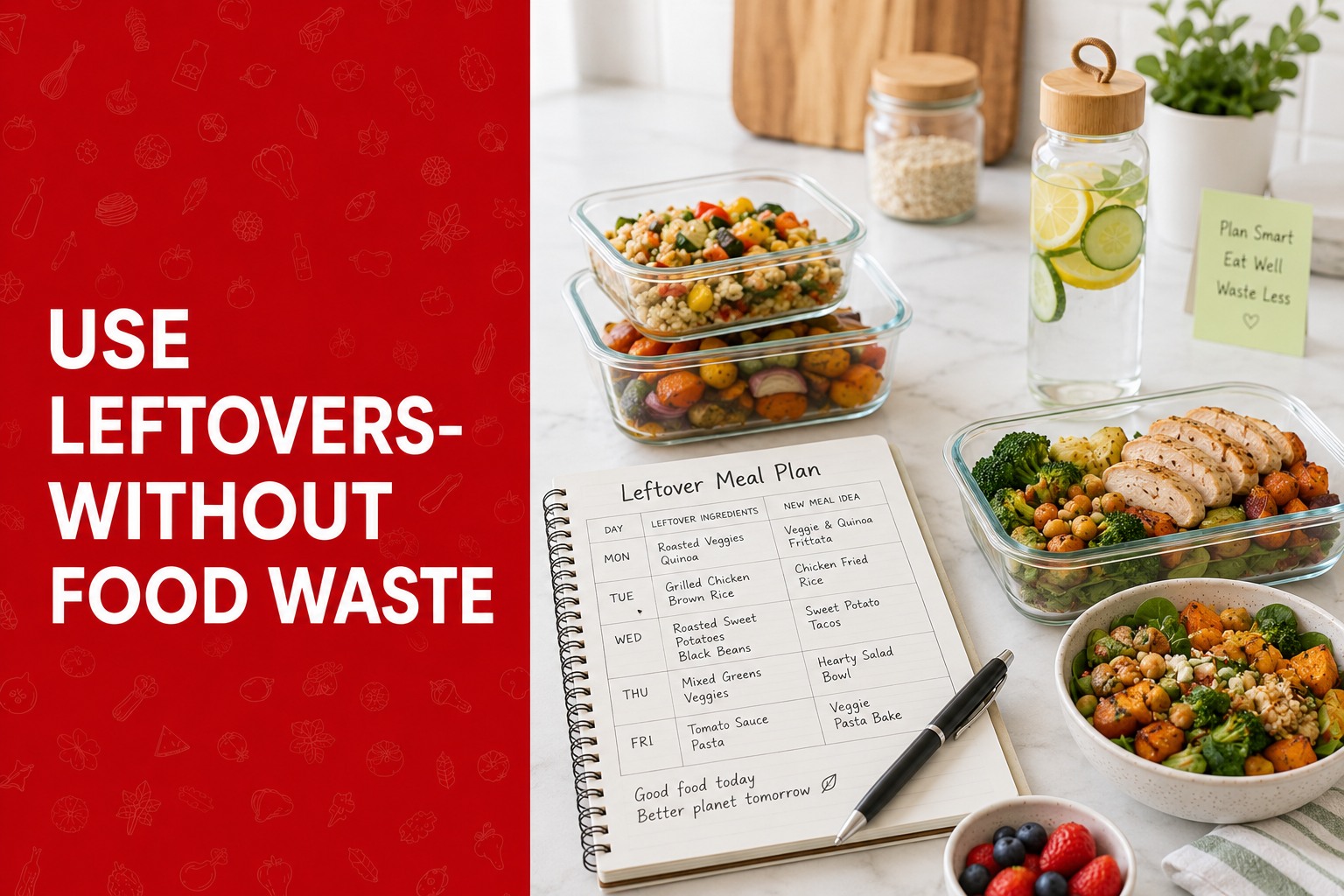
How to Use Leftovers Without Wasting Food: Easy Practical Tips
2026-07-15
Introduction
Wasting food rarely starts with carelessness. It usually starts with good intentions. Whether it's a recipe you plan to try later in the week, fresh vegetables for a nutritious dinner, or leftovers from lunch, you're stocking your pantry with items intended for future use. After a couple of hectic days, the plans adjust, and the ingredients are accumulated in the back of the fridge waiting for someone to do something which no one wants to do.
Instead, they find themselves falling behind in their daily lives and meal preparations. They deal with missed deadlines, adjusted plans, children's meal arrangements, and the lack of motivation to cook from scratch after a long day. With Foodsie, people can make better use of the food available at their disposal, beginning to think of meal concepts based on the ingredients, as well as organize their meal planning more efficiently, avoiding the traditional ‘adding items to the cart again' method
You’ll discover the truth about how and why food waste occurs even in the most organized households. How simple shifts over time can lead to significant reductions in food waste, and the methods that AI tools are helping people use overlooked ingredients to make practical meal suggestions without increasing the stress on your daily fare.
Why Do So Many Good Ingredients End Up in the Bin?
Very few individuals purposely waste food.
In fact, most individuals feel ashamed when they throw away food.
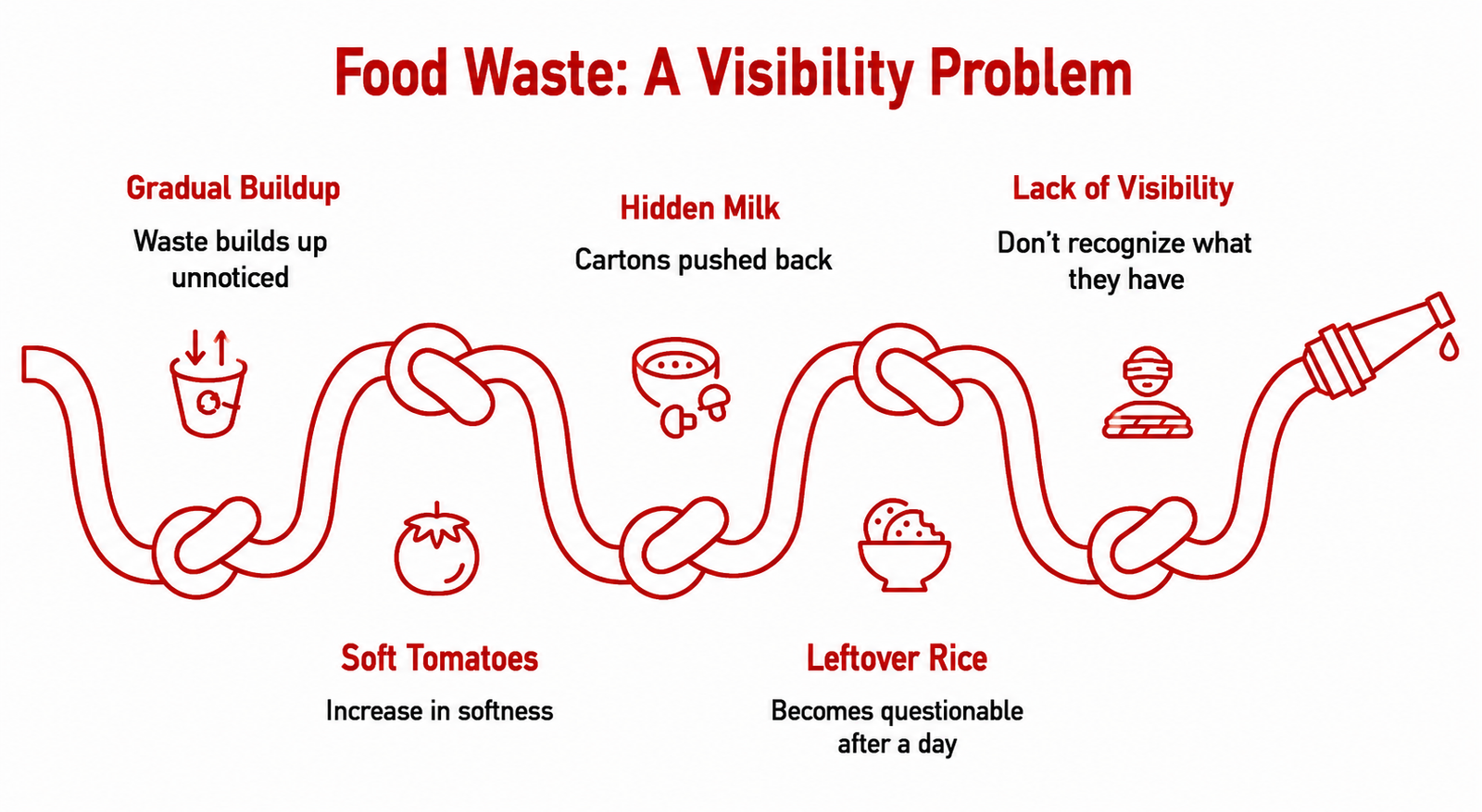
The concern is that waste usually builds up gradually and without being noticed.
For example:
- In tomato, an increase in softness compared to the desired.
- Milk cartons are pushed back by half a carton of mushrooms.
- Leftover rice survives one extra day before becoming questionable.
Eventually, it becomes easier to throw things away than it is to think about what to do with them.
It isn’t a problem with a lack of responsibility...
But a lack of visibility.
If people do not recognize what they have or how to use it effectively, good ingredients can slowly transform into food waste.
Food Waste Is Often a Decision Problem, Not a Food Problem
When it comes to food waste, the majority of conversations centre around shopping.
Believe it or not, it is actually usually the bigger problem that occurs because the groceries arrive in the home.
Each time something is left over, it's a choice to be made.
You start wondering:
Is it ok to use this again tomorrow?
Should I freeze it?
Will anyone eat it?
What could I make with it?
Multiply those questions across an entire week, and the mental load becomes obvious.
This fatigue of decision-making is known as decision fatigue, and is something that psychologists have observed happening as we repeat decisions.
There's one reason that leftover meals may beat the take-out or convenience option on the menu.
Not necessarily for the fact that leftovers are not as useful.
They need more thinking,
Why Leftovers Feel Less Exciting Than New Ingredients
Many leftovers are not eaten; there is also a psychological reason.
Novelty matters.
An empty grocery bag provides plenty of room.
What happened yesterday doesn't always happen again.
When the ingredients are still good, but the original meal has already been consumed, the motivation to use them diminishes.
That is a very odd paradox.
Everyone hates to waste food. But they don't like to eat the same thing over and over, either.
The answer is not forcing yourself to eat something that you don't like, but it is seeing ingredients differently.
Rather than thinking of leftovers as "food that has not been completely eaten," try to think of them as ingredients that need to be used again.
That’s a significant pivot that changes the rules.
How to Reduce Food Waste Without Becoming Obsessive
Most people think that they should have strict schedules of meals and elaborate planning systems to minimize waste.
It doesn't.
When it comes time to do it, small changes typically make an impact.
For example:
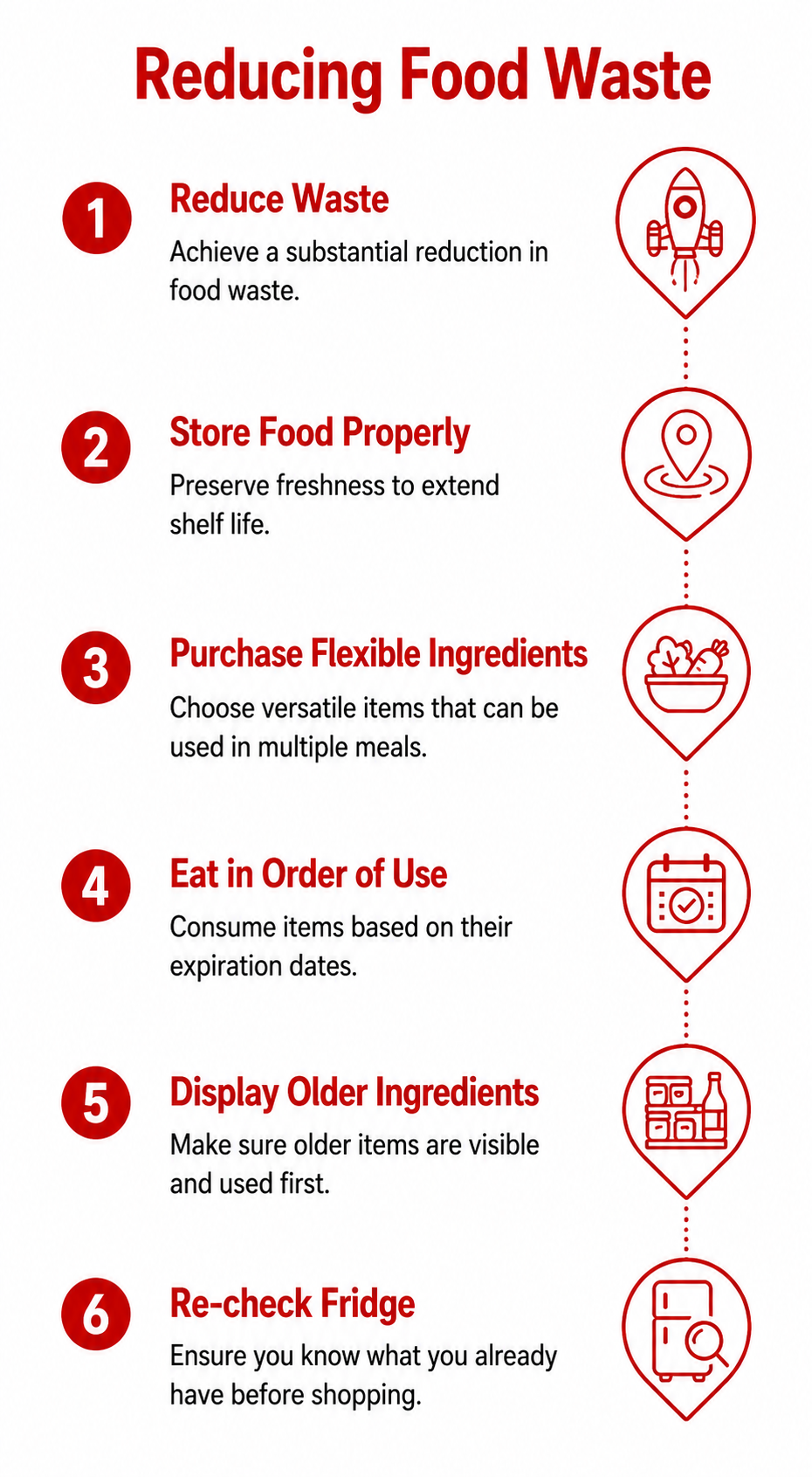
- Re-checking the refrigerator before purchasing food.
- Prominent display of older ingredients.
- Eating foods in order of first use.
- Purchase flexible ingredients that can be used in several meals.
- Properly storing food to preserve its freshness.
These changes are very small in relation to each other.
They work together to produce a substantial reduction in waste in the long term.
It's not a big deal of perfection; it's learning to be aware of reducing food waste.
Why Ingredient-Based Cooking Is Becoming More Popular
Traditional recipe websites ask users to begin with a recipe.
Real life usually begins with ingredients.
That's an important difference.
Most people do not search for:
I want the same meal
They search:
“I have chicken, peppers, and rice! What can I make with them?"
This behaviour change is the reason various ideas and features, such as an ingredient meal generator, are becoming more popular.
Focusing on the food before the recipe, rather than people shopping for it, aids the recipe in changing to available food.
We think that's a more realistic and practical way for busy families, which is also more natural and economical.
Foodsie's Ingredient-Based Recipe Generator Makes Leftovers Useful Again
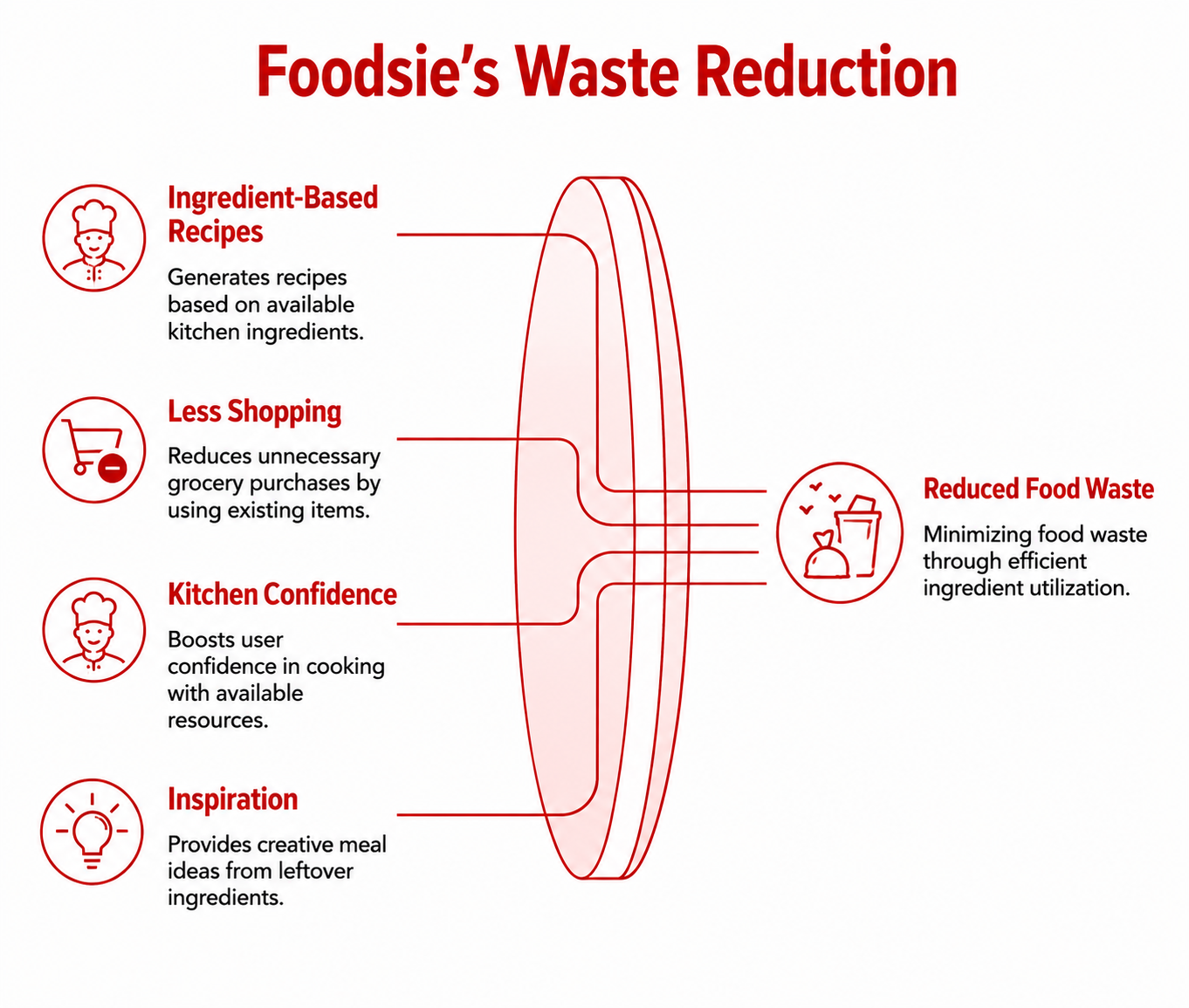
One of the most valuable functions of Foodsie is the one that enables the user to find choices for a meal using ingredients that they may have on hand.
Users no longer need to go to any other recipe sites or start digging and digging on the web; they can look into the suggestions that are offered on the basis of what's in their kitchen.
That shifts the discussion around the topic from:
What would you like to purchase?
to:
So, what can I make already?
This little change can often result in less waste, grocery savings, and increased confidence in the kitchen.
Importantly, it also eliminates the pressure of coming up with new ideas from the get-go every night.
Sometimes, inspiration is all leftovers really need.
Can Technology Help Reduce Food Waste at Home?
Until recently, the best method to reduce food waste was the use of memory only.
Individuals were asked to recall what was in or what was the next product to be used in the refrigerator, as well as what food was to be used in upcoming meals.
What makes memory a poor inventory-management system is that it isn't.
No work equates to lost ingredients!
There are uncountable “forgotten ingredients” that are the root cause of waste.
Technology does that; with technology, ingredients can be made to reappear in the equation.
Intelligent food tools can help users use the tools they have to find opportunities that are right under their noses, before it is too late to use the ingredients to generate rich meal suggestions.
So, while some might be thinking food technology is substituting for cooking, in many ways it's not.
It is helping the organization of families.
Why Random Inspiration Sometimes Works Better Than Strict Planning
Sometimes, the best way to make things work is not to have to plan, but it makes more sense to let things fall where they may because they want to go there.
Detailed meal plans are not for everyone…
Some people like to have options.
Others just don't get a sense of what they're hungry for until that time.
It is there that discovery tools can be very useful.
A random recipe generator adds variety without burdening the user with the added work of typing in new, random recipes. People can rotate meals in the same manner as they have been doing with 5 meals each week, but this time they have the opportunity not only to identify new meals, but also to use up some of their current ingredients.
Interestingly, this can actually boost in-home cooking attitudes!
Novelty matters.
Often, a new idea can bring an old recipe into an exciting territory for today.
The Rise of Ingredient-First Cooking
Cooking had been a routine that had been going on for many years, like this.
- Find a recipe.
- Buy ingredients.
- Cook the meal.
Today, modern homes are making a comeback by lowering their breastplate. Many people are now starting their meal with what they have and adding on to it.
This is an economic, eco-friendly, and viable practice from a practical standpoint.
Cooking with ingredients first allows you to have greater flexibility without leaving any food "going bad" as you would with buying ingredients for just one dish.
This change in actions can be seen in the rise of the popularity of the food generator.
People want solutions that make their kitchens fit their food; instead of their food fit their kitchens. They want to make delicious recipes with minimal ingredients.
Why "Use It Later" Rarely Works
It's a sentiment that a lot of people have expressed before.
“I'm going to use it the next day.”
Sadly, the day will turn into the week the next day…
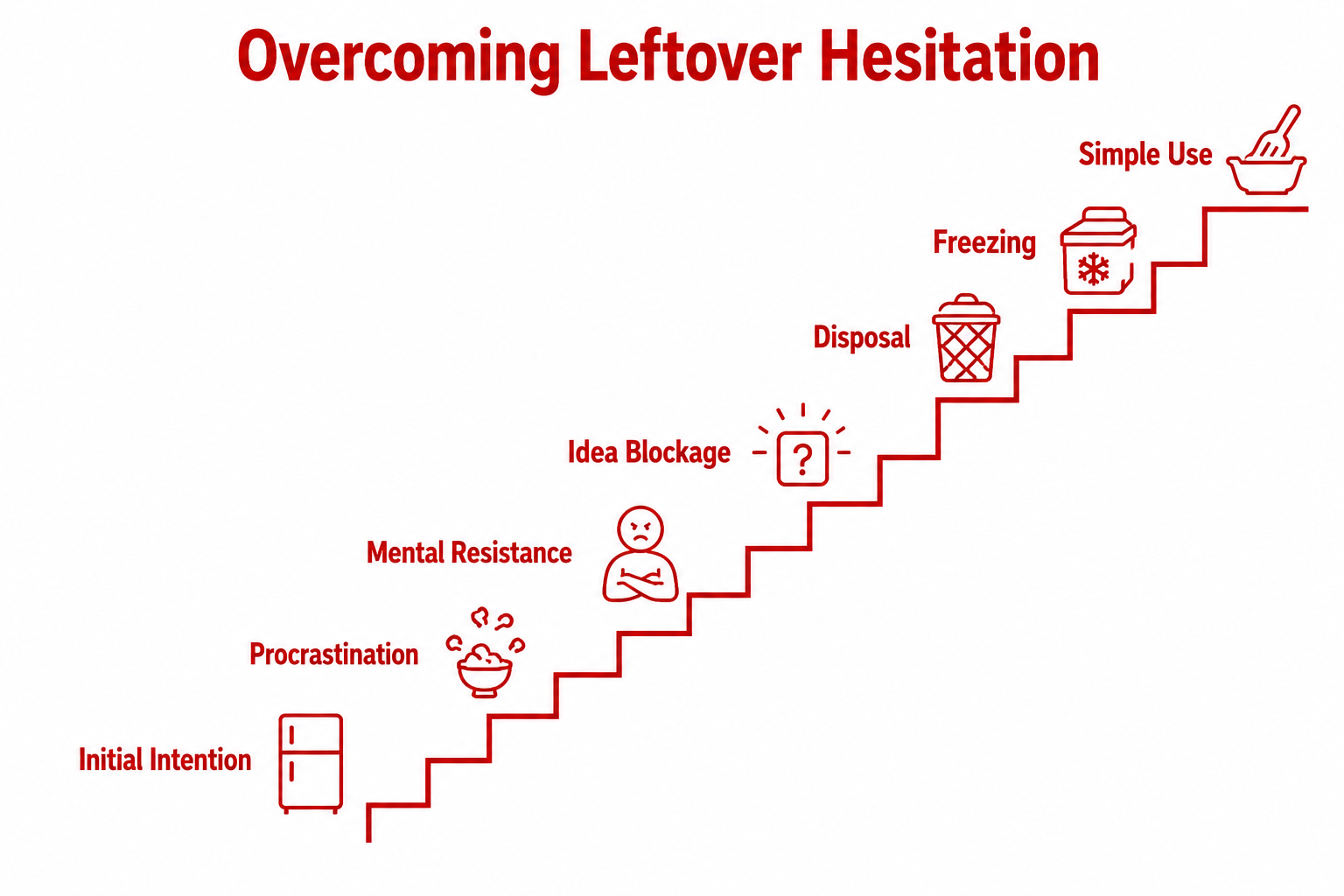
A major fault that homeowners often commit is putting off thoughts of future problems by labelling their leftovers as “someday.”
The longer something isn't used, the more mental resistance will begin to build up around it, i.e., a loss of freshness.
It becomes more difficult to think of ideas.
With time, it becomes simpler to simply dispose of something than to make decisions.
Freezing leftovers fast is not only about food safety.
Friction is what we need to minimize even before it occurs.
The easier an ingredient is to use, the more likely it is to be used.
How AI Is Changing the Way We Think About Leftovers
AI is bringing a new outlook to home cooking.
The traditional recipe websites ask:
Which recipe would you like to make?
AI asks:
What materials can you already get your hands on?
See how the question changed?
Instead of focusing on consumption, AI encourages utilisation.
Rather than a trip to the store, it promotes creativity in terms of existing resources.
That's why ingredient suitability is increasingly beneficial to today's modern homes. They transform leftovers from problems into possibilities.
Foodsie's Recipe Generator Removes the Guesswork
Staying within a week of leftover meals often isn't the difficult part of using leftovers.
It's the place to begin.
Foodsie's ingredient-based recommendations are designed specifically to solve that problem.
Users can discover meal ideas utilizing components currently in their kitchens, lessening needless buying and making it simpler to develop a meal.
The experience is more productive than searching and feels like problem-solving.
That distinction matters.
Searching can be overwhelming at times.
Recommendations are things that generate momentum if they are guided, not random.
Whereas people realize what they are able to make, they are much more prone to prepare in comparison to dragging their procrastination out until tomorrow.
Can Reducing Food Waste Save Money?
Absolutely.
It's a problem with food waste that is far from environmentally friendly.
That's a money-related one.
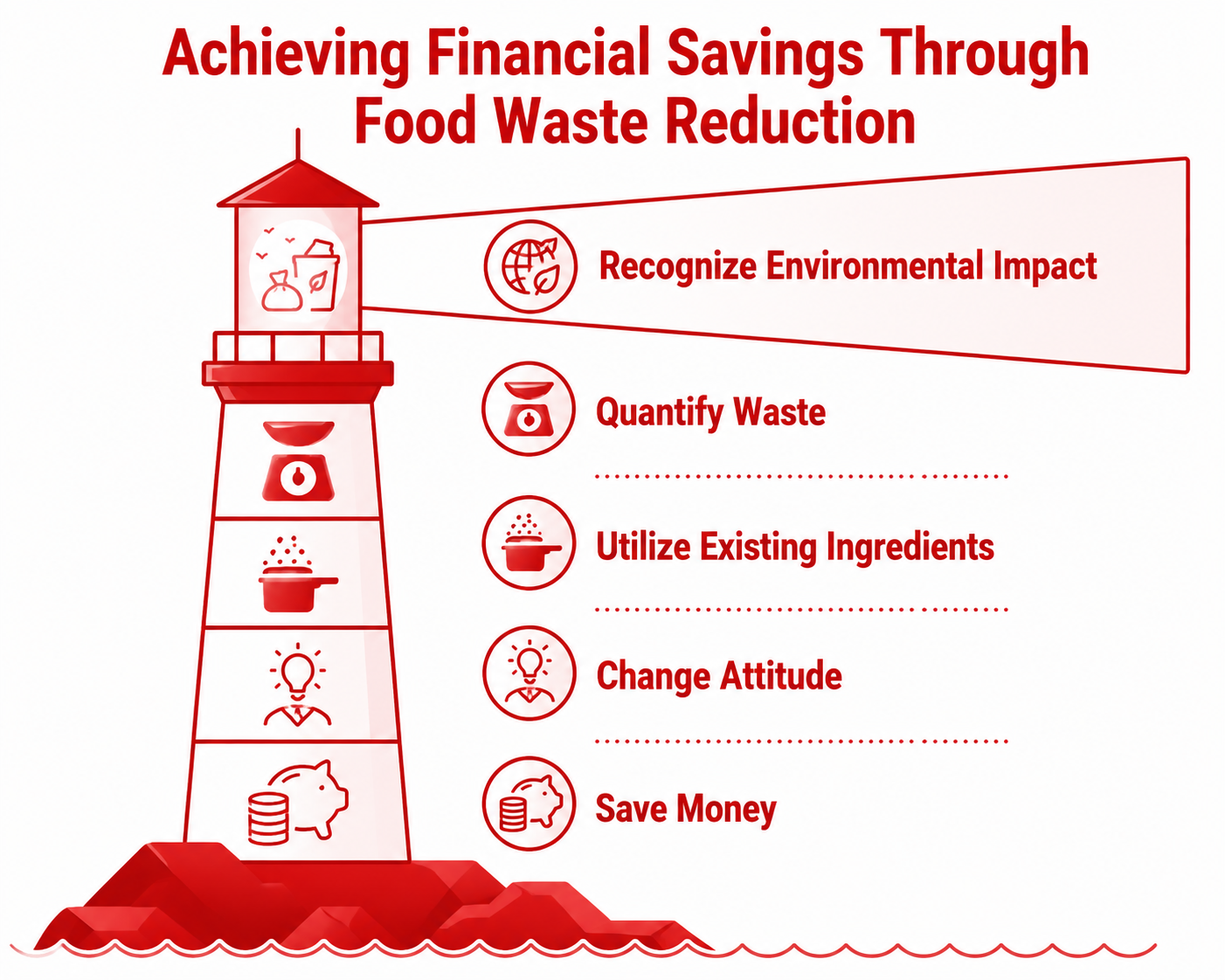
It might seem like helping people to throw out little bits of food at a time is not much, but then these are all the food that's been tossed over the course of a month or a year.
It doesn't have to cost you less to save money on waste.
It frequently involves using more of what you've already bought at the store.
This change in attitude can make a considerable difference to family budgets and does not deprive anyone of anything or restrict their lifestyle.
Saving for money does not often sound like a fun activity.
Put to use what you have already paid for.
Is Food Waste Really That Common?
There are many people who think that the amount of waste that their households produce doesn't matter.
The truth is, it is quite another scenario.
Food waste is one of the most widespread challenges facing households globally, largely because it happens quietly through small daily decisions rather than dramatic events.
- Half a pepper here.
- There are some slices of bread.
- A leftover container was left unnoticed over the weekend.
Individually, these moments seem insignificant.
Collectively, they become substantial.
No one is being any more pointedly reminded here of their need to reduce food waste; it's not a thing of guilt. It's about awareness.
As soon as you start seeing them, changes will typically follow suit.
What Should You Look for in a Recipe Planning Tool?
Not all food apps attempt to solve the same problem if they are looking to reduce waste.
The best tools usually enable the users to:
- Find out what can be done with common ingredients to create ideas.
- Efficiently plan meals during the week.
- Make single purchases to avoid double-buying groceries.
- Allow flexibility of meal planning.
- Promote the use of ingredients before their expiry date.
- Cook faster, easier, and without stress.
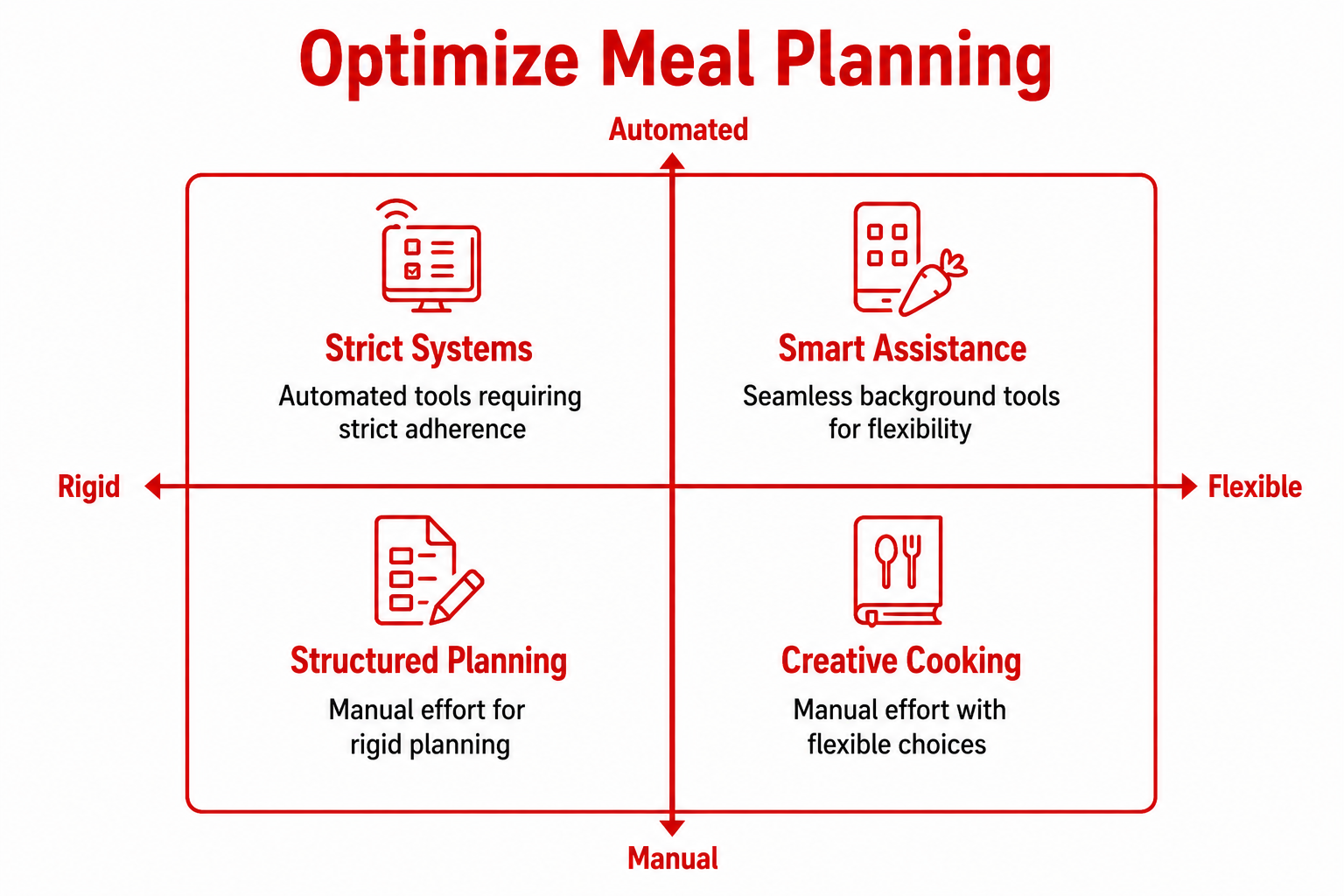
The ideal recipe planner app goes by the name of simplifying life and not making it more complicated.
The best systems can make themselves obsolete and work seamlessly in the background, making good decisions easier.
How Home Cooking Is Becoming Less Wasteful
Convenience and sustainability struggled for years to be equally important.
Time was needed to prepare from the start.
The challenge of reducing waste had to be endured.
The organisation demanded discipline.
The use of technology is starting to challenge them.
With AI gaining the ability to learn more about the ingredients, preferences, schedules, and habits of the home, cutting waste could become a matter of better systems rather than willpower.
It's not about being perfect.
No one has all the ingredients all of the time.
The object of the game is to move forward.
Budget, kitchen, and environment will all benefit from just a small decrease in waste.
Conclusion
People usually don't waste food because of apathy. They waste food because in modern life, it's easy to forget what one has at home, and very hard to make a decision about using up the food by the time one needs to.
It is not the case of taking things back to the basics or getting organized in a flash. It is more about working to a better use of the ingredients currently lying in your kitchen and getting rid of the ‘no man's land' barrier that demoralizes good intentions.
In answer to that gap, Foodsie's wisdom-driven "recipes to try" section allows any inventory of ingredients to translate to a feasible option that diminishes the guesswork and increases the confidence of household chefs when buying food every day.
Often, it is not simply a case of buying less food.
This is related to the idea of maximizing the potential in your resources.
Frequently Asked Questions
1. How do I stop wasting food?
Plan meals before shopping, buy only what you need, and store food properly to extend freshness. Use leftovers creatively, freeze excess ingredients, and check your pantry before purchasing more. Tracking expiration dates and portion sizes can also significantly reduce household food waste.
2. How much food is wasted globally each year?
Around 1.05 billion tonnes of food are wasted globally each year, according to the United Nations Environment Programme (UNEP). This represents roughly 19% of food available to consumers and occurs across households, food services, and retail sectors. Food waste contributes to environmental, economic, and food security challenges worldwide.
3. What are the most effective food waste solutions?
The best food waste solutions include meal planning, proper food storage, portion control, and using leftovers before they spoil. AI-powered meal planning tools can further reduce waste by helping you buy the right ingredients and create meals from what you already have. With Foodsie, you can generate personalized meal plans and recipe ideas that help minimize food waste while making everyday cooking easier.
4. What is the best way to store leftovers so they stay fresh longer?
Store leftovers in airtight containers, refrigerate them promptly, and label them with the date so you use the oldest food first. A simple “eat me first” section in your fridge also helps prevent food from getting forgotten and wasted.