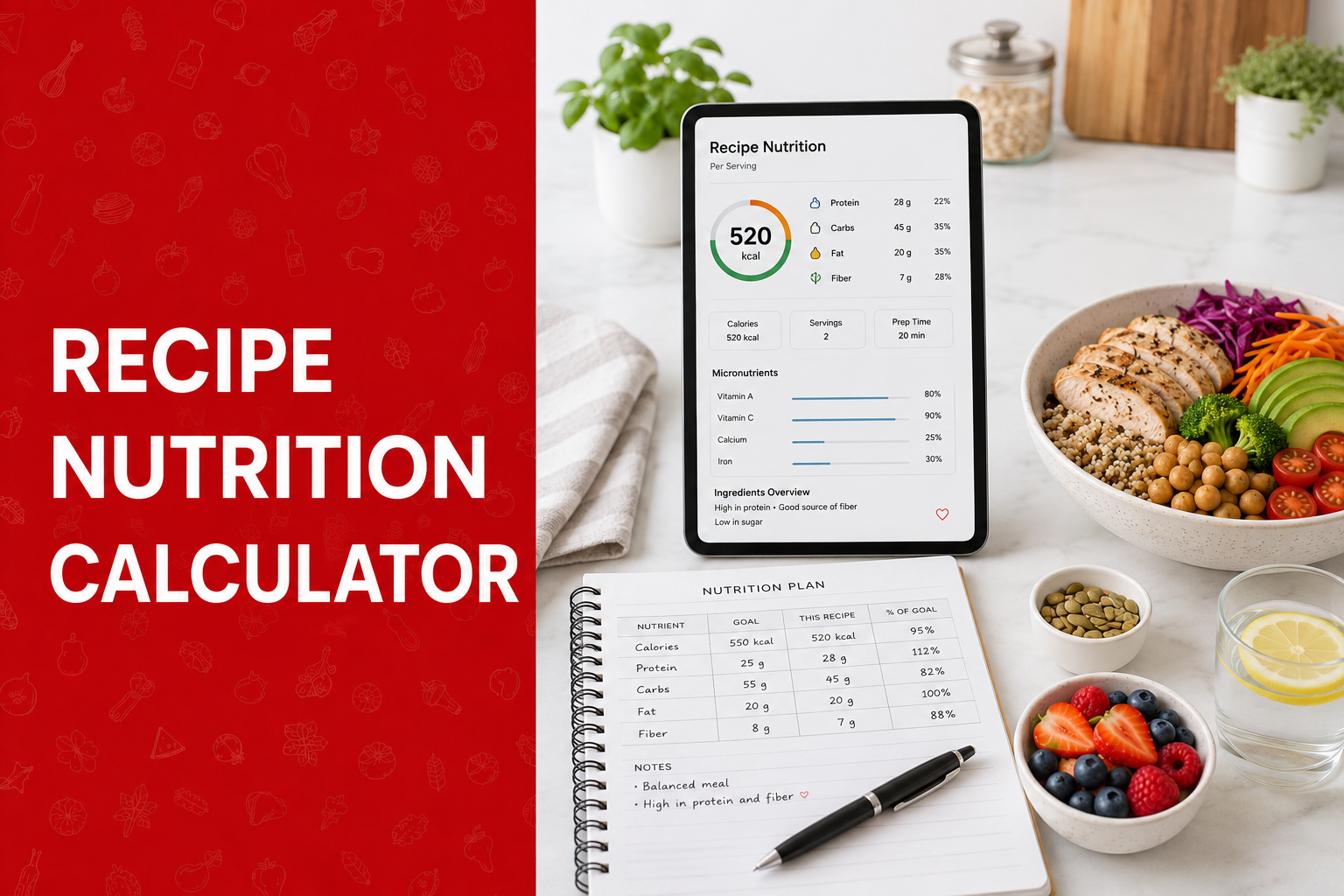
Recipe Nutrition Calculator: Calculate Calories & Macros Easily
2026-07-22
One of the most useful and sought-after tools for those who want to know what they're really consuming is a recipe nutrition calculator. For people who like to cook from scratch, follow a fitness plan, or just try to make healthier choices, homemade food often presents a big quandary: people know what's in the recipe, but not necessarily what's on the plate! There's nothing quite like having a very healthy meal you feel good about and not knowing how it fits into your goals.
A significant number of people experience uncertainty that often goes unnoticed. Packaged foods feature labels, but homemade options do not. This absence of information makes it difficult to keep track of calories, calculate proteins and carbohydrates, and stay aligned with your own health objectives. No worries! This problem can be solved by combining intelligent recipe tools with nutritional insights, making it easier to understand the value of all meals without spending hours doing manual calculations.
In this guide, you'll get to know how recipe nutrition calculators work, why calorie counting isn't everything, learn about how to do a better job of estimating the nutritional content of home-prepared meals, and how artificial intelligence is easing the burden of the home chef.
Why Homemade Food Is Harder to Track Than Restaurant Meals
Oftentimes it is believed that homemade food must be nutritious…
Many times, they are.
However, healthfulness doesn't always equal "Readability".
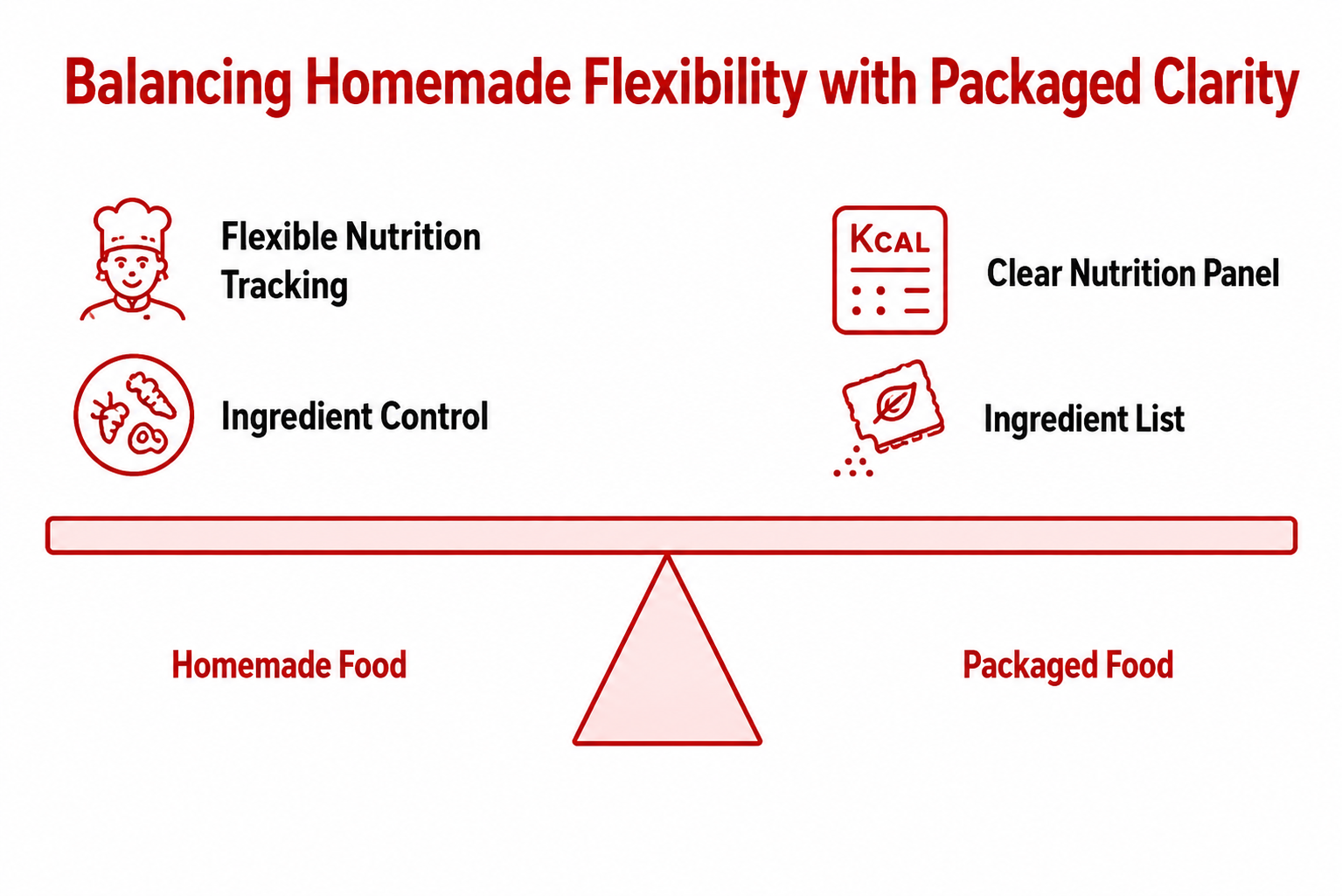
You have control over all the ingredients, every portion of your food, and how you prepare it at home. Flexibility is good, but it also complicates the nutrition tracking process when comparing the nutrient panel of a packaged item.
A simple pasta dish could consist of olive oil, vegetables, herbs, cheese, and protein. Each of these ingredients makes sense on its own. When combined, the sum of the food's nutritional value is a lot harder to compute.
It's why so many people look into ways to do the calculations for the nutritional content of a recipe without doing it themselves.
Why Calories Tell Only Part of the Story
Calories are so often discussed due to being easy to compare.
However, calorie numbers cannot just be limited to evaluating the goodness or poor quality of a meal in terms of its satisfaction, balance, or nutritional value.
Suppose that two meals have the same calorie count.
One offers low-fat protein, fibre, healthy fats, and complex carbohydrates.
The other is composed mostly of refined sugar and processed food.
It is possible for both meals to have the same calorie count.
The nutritional value isn't…
Knowing what to eat isn't just about counting calories or enjoying certain foods in moderation. It's about how everything on your plate works together to create a balanced meal.
This is where macros come in handy.
What Are Macros and Why Do They Matter?
Macronutrients (macro) are the nutrients that your body needs the most.
They include:
- Protein
- Carbohydrates
- Fat
Each serves a different purpose for providing energy, supporting muscles, aiding recovery, brain support, and general health.
Many are giving more attention to balance rather than just calorie counts because they provide a better picture of nutritional quality.
For instance, if someone is doing regular training, perhaps they want to consume more protein, or perhaps another person wants to try to work on the inclusion of more fibre-rich carbohydrates, or the inclusion of more healthful fats.
A recipe nutrition calculator will ease the confusion by evaluating the whole recipe, instead of manually calculating each ingredient.
What is Making Nutritional Awareness Imperative?
Eating healthy has transformed over the last 10 years.
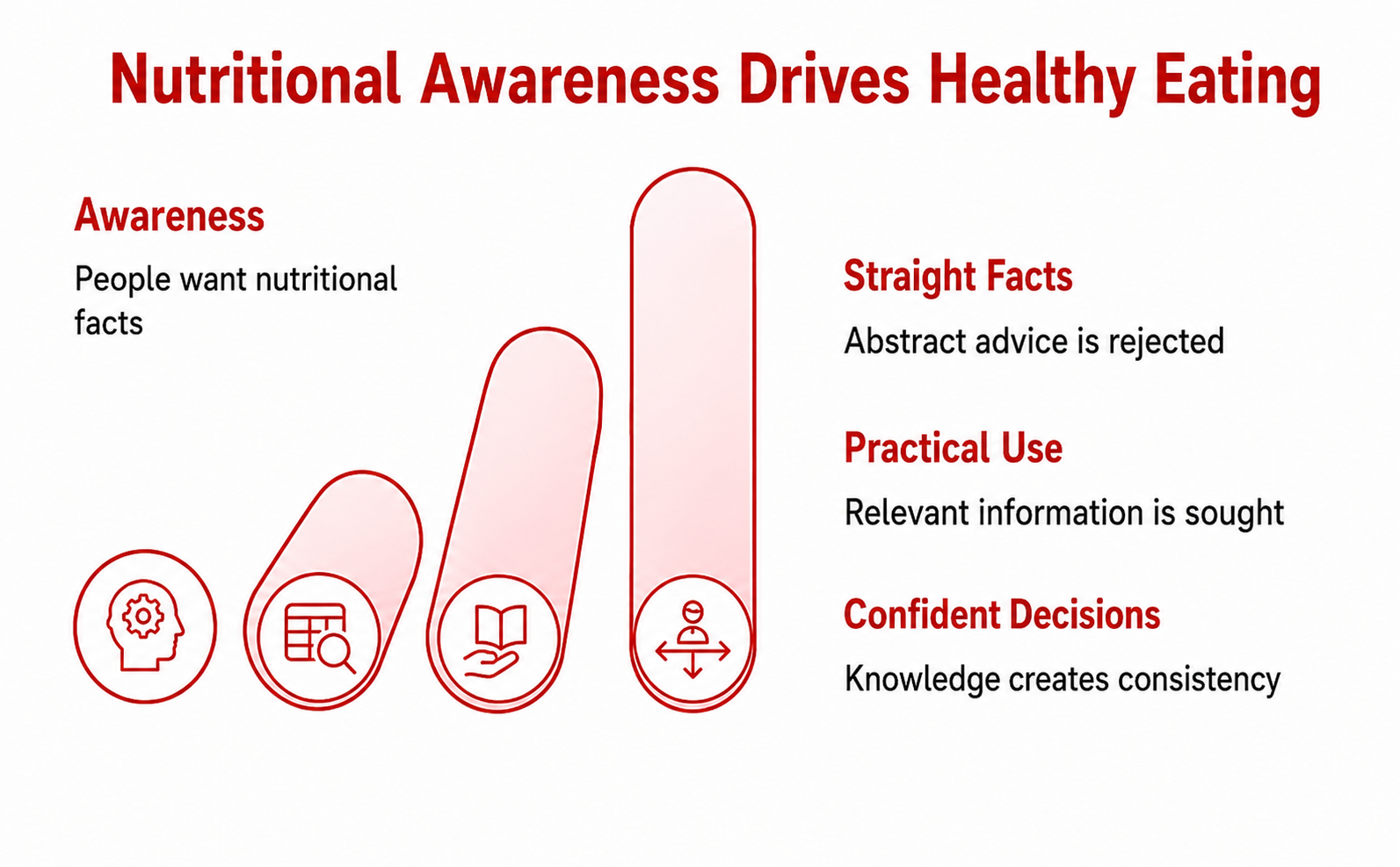
Recent studies make it clear that people are no longer accepting abstract nutritional counsel; they are NOT taking "eat better" advice anymore.
They have always wanted straight facts and information of practical use to them and which are relevant to what they eat.
In fact, this is the reason that people still search for how to determine the nutritional content of homemade recipes.
Eating at home provides individuals with increased control of ingredients, which also increases their responsibility.
Knowing what is in a meal doesn't mean being obsessive. It's about confident decision-making based on information, because knowledge creates consistency.
Practice, consistency, and long-term results are the key, and a lot of times, this is better than perfection.
Foodsie's Recipe Nutrition Calculator Makes Homemade Meals Easier to Understand
Some of Foodsie's practical benefits include its Recipe Nutrition Calculator, a tool that helps users to analyze the nutrition for a recipe without entering the long and complex equations or creating one themselves using a spreadsheet.
These are the optimum calorie amounts and proportions of ingredients in a recipe, versus the user's estimate, providing the user with a more accurate idea of calories, macronutrients, and the overall nutritional profile for a homemade recipe.
That information can help them plan their meals, make healthier food choices at the supermarket, and do a better job of preparing healthy meals at home.
Most importantly, it will help close the distance between making and eating food and learning about it.
Preparing food shouldn't be a nutritional university course!
Calculations can be done using technology; people can focus on enjoying food.
Can You Trust Nutrition Calculators?
This is invariably one of the prevalent inquiries everyone has.
This is partly dependent on the quality of the data used.
A well-designed recipe nutrition calculator estimates nutritional value based on the recognised food composition information file and the information for the recipe presented by the user.
While there are endless variations among ingredient brands, preparation techniques, and serving sizes, modern multiplication and division tools are pretty close in terms of how they can be used in daily nutrition and meal planning.
It's not about being mathematically perfect. It's down-to-earth advice that assists individuals in making effective choices regularly.
The typical household does just fine with that.
Does Cooking Change the Nutritional Value of Food?
One question many people don’t think about is whether cooking changes the nutritional value of their food.
The answer is YES, but not immediately in everyone's expectations.
Cooking can change the water content, weight, and texture of ingredients, which in turn affects the nutritional value of the servings. Some vitamins are sensitive to heat and may be reduced during cooking, while other foods actually become easier for your body to digest once they’re cooked.
Protein, carbs, and fats generally remain unchanged, but adding ingredients like oil, butter, or sauces can significantly increase the calorie content of a meal.
That's why the recipe nutrition calculator will be more helpful than estimating each ingredient individually. It takes into account the entire recipe, providing an overview of the food's nutritional content once it's cooked, not just the ingredients you put together.
Understanding the 90-30-50 Method
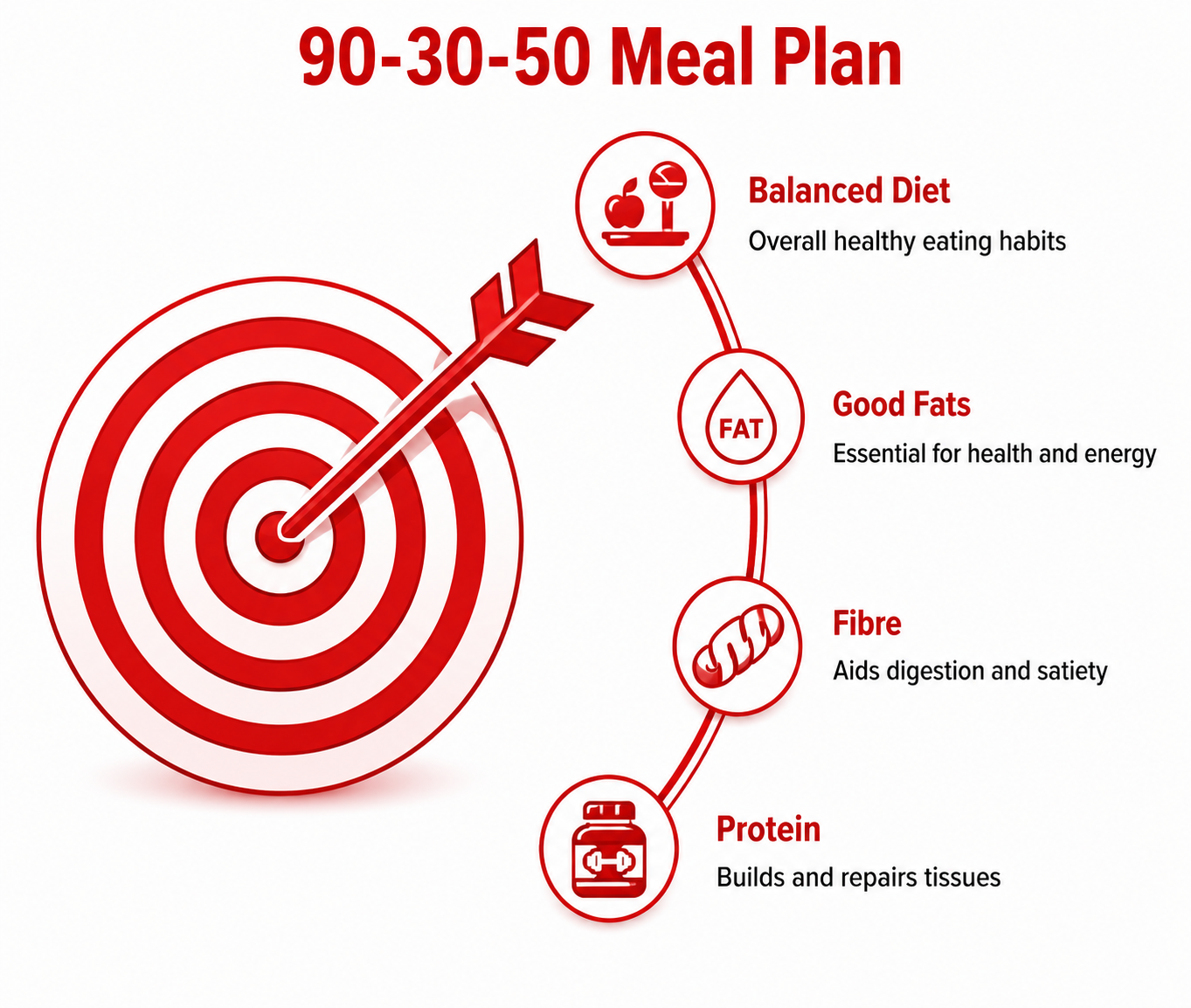
If you've been seeking shrewd strategies for healthier eating, you might have heard about the 90-30-50 meal plan.
The general idea is that it would be nice to have a well-balanced diet each day, with a focus on these colours:
- 90 grams of protein.
- 30 grams of fibre.
- 50 grams of good fats.
Instead of encouraging fad diets, it emphasizes creating welcoming, nourishing, and sustainable eating plans.
Remember, these numbers do not apply universally. Food recommendations will be based on the age, activity level, health goals, and individual needs of the participants.
What it really means is not to go for daily perfect numbers.
It's knowing the balance of nutrients you need in your foods and knowing when and how to increase or decrease them as necessary.
That's where recipe analysis becomes truly beneficial
What Foods Have Good Carbs?
Some people give carbohydrates a bad rap.
In fact, the main type of food for the body consists of carbohydrates, and many of the healthiest foods are packed with carbohydrates.
So, if you're wondering what foods are good carbs, here are some to pay attention to that offer nutrients as well as energy:
- Oats
- Brown rice
- Sweet potatoes
- Quinoa
- Beans and lentils
- Whole grain breads and noodles
- Fruits
- Vegetables
High in fibre, vitamins, minerals and long-lasting energy, these foods typically have low levels of refined carbohydrates.
If you’re following a diet and enter your recipe, a nutritional information calculator can help you grasp not only the carb count in a meal but also how it fits within the recipe's nutritional profile.
Why Portion Size Changes Everything
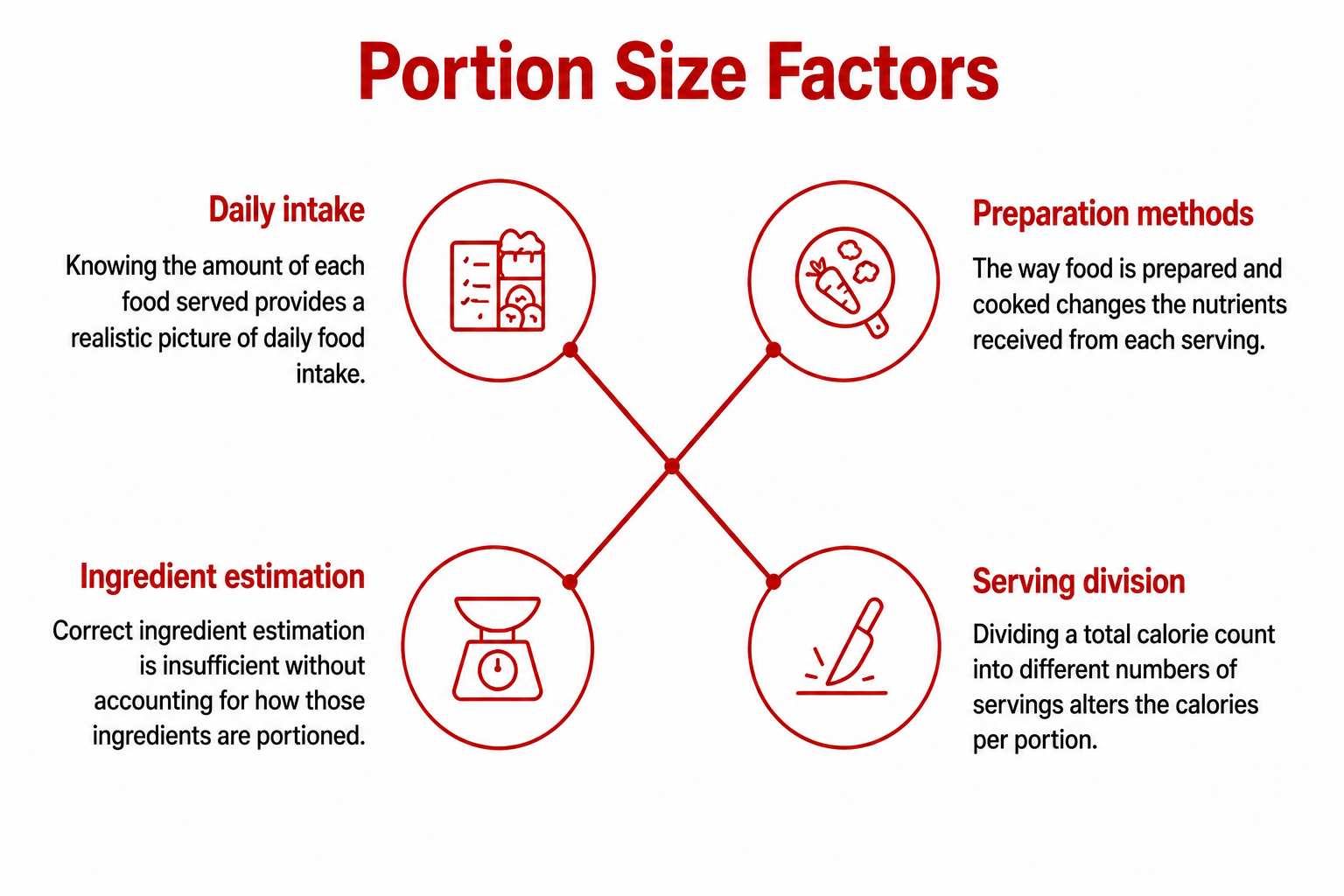
You and someone else could eat exactly the same recipe, and yet the nutritional count for both of you can be different from one another.
Surprising, right?
That’s because the way food is prepared, cooked, and portioned can change the nutrients you actually get from each serving… all about serving sizes and ingredients.
Let's say the pasta bake of your homemade creation has a total of 2,000 calories.
If it's divided into four servings, each serving contains approximately 500 calories.
When it's portioned out into six servings, the number of servings drops substantially.
One of the most common mistakes that people get wrong when it involves cooking at home.
Their estimation of the ingredients is correct, but they are not taking into account how the ingredients are portioned.
Knowing the amount of each food that is served provides a more realistic picture of daily food intake.
Common Mistakes People Make When Calculating Homemade Recipes
Now that you know how to calculate the nutrition in your homemade recipes, it’s worth looking at a few common mistakes that can throw off your numbers.
The good news? Tracking homemade meals doesn’t have to be complicated. However, small errors can easily lead to inaccurate nutrition estimates, making it harder to understand what you’re actually eating.
These include:
- Losing cooking oil, butter or dressing.
- Avoiding sauces and condiments which contain calories.
- Approximating the amount of ingredients, rather than measuring.
- Serving the incorrect portion sizes.
- Tripping over additional extras and garnishes.
All of these errors are not unusual.
They are actually what makes nutrition tools and mobile applications so successful.
They don't resort to sole memory or approximate measurements, but give a uniform method of judging recipes.
It Appears That Free Recipe Nutrition Calculators are Becoming a Necessity.
People's approach to healthy eating is getting more individualistic.
Individuals do not just stick to any type of diet regimen.
They're cooking their families' favorite recipes, trying something new, modifying meals for special dietary needs, and devising recipes that are not in any cookbook.
It is a much more difficult exercise than analysing nutrition.
A free recipe nutrition calculator is a tool that allows home cooks to receive valuable nutritional information without the need to have expertise in nutrition or specialized software.
You can save time on manual calculations and concentrate on optimizing recipes, tweaking ingredients, and making better use of your food.
Good technology will not complicate things, but simplify them.
Foodsie Helps You Understand Recipes, Not Just Create Them
Most food sites end at the recipe end of things…
Foodsie does more.
The Nutrition Information Calculator feature aids users in grasping the nutritional makeup of their home-cooked meals, a crucial step when planning recipes to assess the calorie, macronutrient, and overall balance.
That extra added clarity will enhance any number of objectives from healthy eating to a structured fitness plan, all while providing an easy option to nutrition.
Knowing what is in your meals shouldn't take away the fun of cooking.
It should just help you to cook with confidence.
Why Nutrition Is About Patterns, Not Perfection
Having one meal doesn’t determine your health.
It’s not ruined by one dessert, one takeaway, or one indulgent dinner.
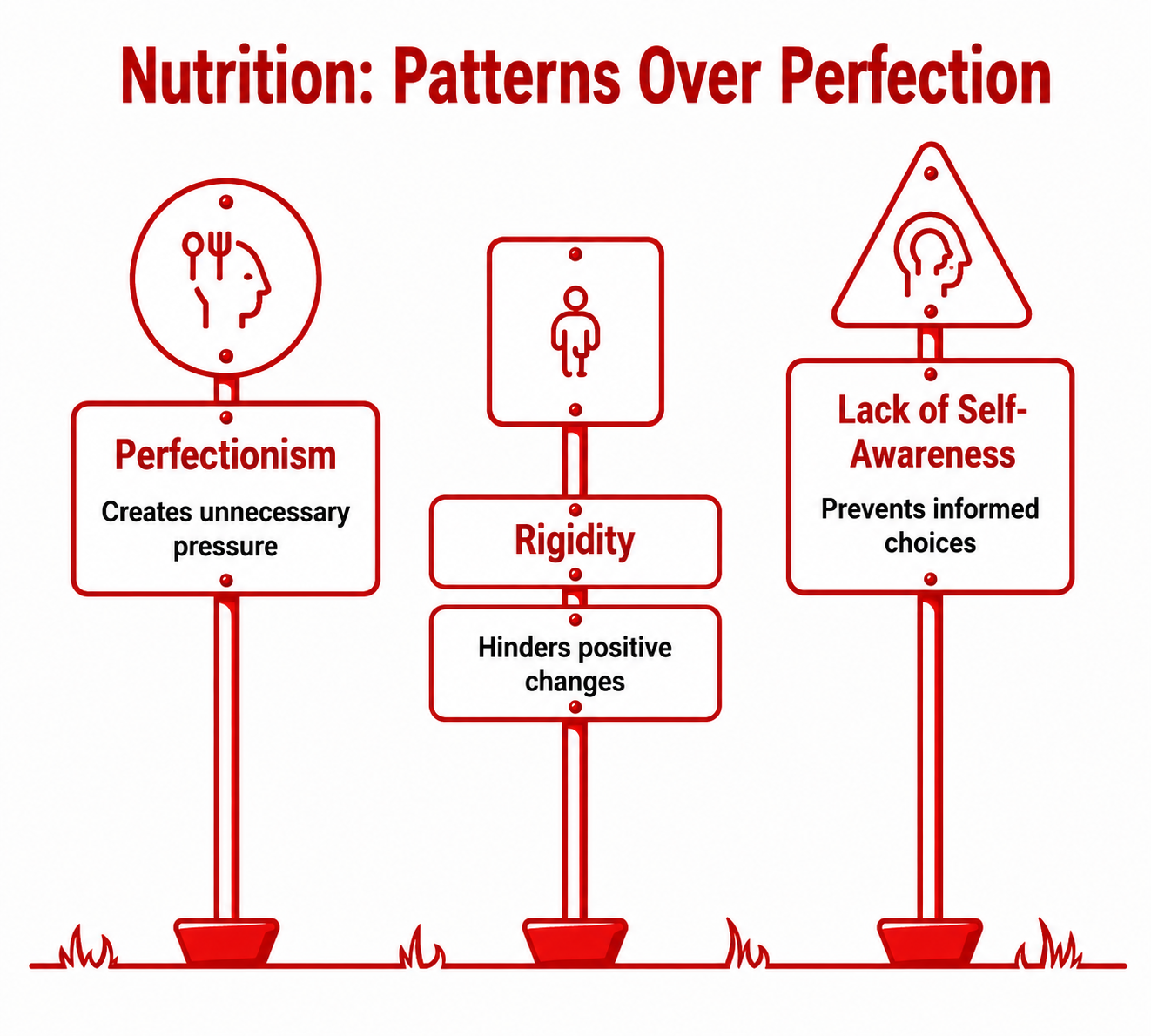
What actually matters is the pattern of choices you make over weeks, months, and years. That’s what has the biggest impact on your long-term health and wellbeing. Keeping this in mind can also take a lot of unnecessary pressure off your shoulders. After all, healthy eating is about consistency, not perfection.
Rather than get stressed out over making everything “right”, keep on making informed choices on a regular basis.
There's no need to be rigid when it comes to nutrition awareness.
It's all about knowing yourself intimately enough to make positive changes over time. Small improvements repeated over and over time and again will far outweigh any dramatic changes that can't be sustained.
Nutrition Isn't One-Size-Fits-All
Nutrition advice is changing from "one size fits all."
That change is being propelled by artificial intelligence at a much faster pace.
Instead of just employing a one-size-fits-all approach, intelligent food platforms can assist people in learning recipes in a way that suits their nutritional objectives and taste buds.
That personalization helps make eating healthy more attainable, as its suggestions are not vague and general.
With the ongoing development of AI, nutrition tools will be even more helpful to home cooks in comprehending not just what they are eating, but how changing some of their ingredients can affect the overall nutrition of their meal.
Knowledge is the enabling factor of good decisions…
and healthy habits are made with better decisions.
Making Every Homemade Meal Count
Making your own meals is no less than a packaged food that is unique in its own way because you have complete control over all your ingredients. Moreover, when you understand the nutritional value of the recipes, it becomes even more valuable to you.
With Foodsie’s recipe Nutrition Calculator, you can find the help you’re looking for. Instead of guessing calories, macros, or serving sizes, you can get a clearer picture of what's on your plate in just a few clicks. No matter if you’re following a 90-30-50 diet or simply trying to make more informed food choices, having that information readily available can make a difference.
At the end of the day, healthy eating shouldn't feel complex or overwhelming. The goal isn't to chase perfection but to enjoy the meals you love while understanding what you’re eating. With the right tools and a little knowledge, you can cook with more confidence and enjoy every bite with greater peace of mind.
Frequently Asked Questions
What Is the Best Recipe Nutrition Calculator App?
The best recipe nutrition calculator app is one that accurately calculates calories, macros, serving sizes, and nutrient values based on your ingredients and portions. Foodsie's Recipe Nutrition Calculator makes this process simple by giving you detailed nutritional insights for homemade recipes, helping you make smarter food choices without the guesswork.
Can I calculate calories and macros from a recipe link or ingredient list?
Yes. Most recipe nutrition calculators can analyze a recipe from an ingredient list, and some can even import recipes directly from a URL. Once the ingredients and quantities are added, the tool calculates calories, protein, carbohydrates, fats, and other key nutrients per serving.
How do I calculate nutrition for a recipe?
To calculate nutrition for a recipe, list all ingredients along with their quantities, enter them into a recipe nutrition calculator, and specify the number of servings. The calculator will then estimate calories, macros, and nutrient values for the entire recipe and for each serving.
How accurate is a recipe nutrition calculator?
A recipe nutrition calculator can provide a reliable estimate when ingredient amounts and serving sizes are entered correctly. Accuracy may vary slightly depending on cooking methods, ingredient brands, and recipe modifications, but it remains one of the most practical ways to track nutritional intake.